
Corporate Gala Lighting Design: The 2026 Technical Production Guide
A ballroom can feature exquisite decor and an exceptional program, yet still feel flat the moment the overhead fixtures dim. When executed without technical precision, corporate gala lighting design often leaves speakers squinting into blinding stage washes while casting unflattering facial shadows across live video feeds.
You already know that an extraordinary evening demands an atmosphere of true prestige. Your stakeholders and honorees should feel completely immersed from their first step inside, and every keynote presenter deserves to look commanding both in the room and on the IMAG screens. Achieving that visual standard requires moving past basic venue uplighting and confronting the realities of rigging limits, clean power distribution, and multi-vendor communication.
In this technical production guide, you will master the engineering principles needed to transform cavernous ballrooms, flatter every guest, and ensure flawless, broadcast-quality video capture without flicker or blowout. We examine modern fixture layering, power planning fundamentals, and the unified cue synchronization workflows required to elevate your 2026 gala into an unforgettable brand experience.
Key Takeaways
- Master the core principles of corporate gala lighting design to shape emotional pacing, direct room focus, and elevate executive presence on stage.
- Discover how to balance layered fixture architectures, combining precision profile spots with textured ambient washes to create depth across cavernous ballroom spaces.
- Learn the critical optical adjustments needed to satisfy both in-person banquet ambiance and broadcast-grade video cameras, eliminating dark facial shadows and IMAG noise.
- Uncover best practices for power distribution and certified overhead rigging that safeguard seated attendees while supporting intricate visual transitions.
- Understand how partnering with a single, integrated production team across lighting, audio, video, and rigging removes multi-vendor friction for a flawless gala delivery.
The Fundamentals of Corporate Gala Lighting Design: Purpose, Optics, and Ambiance
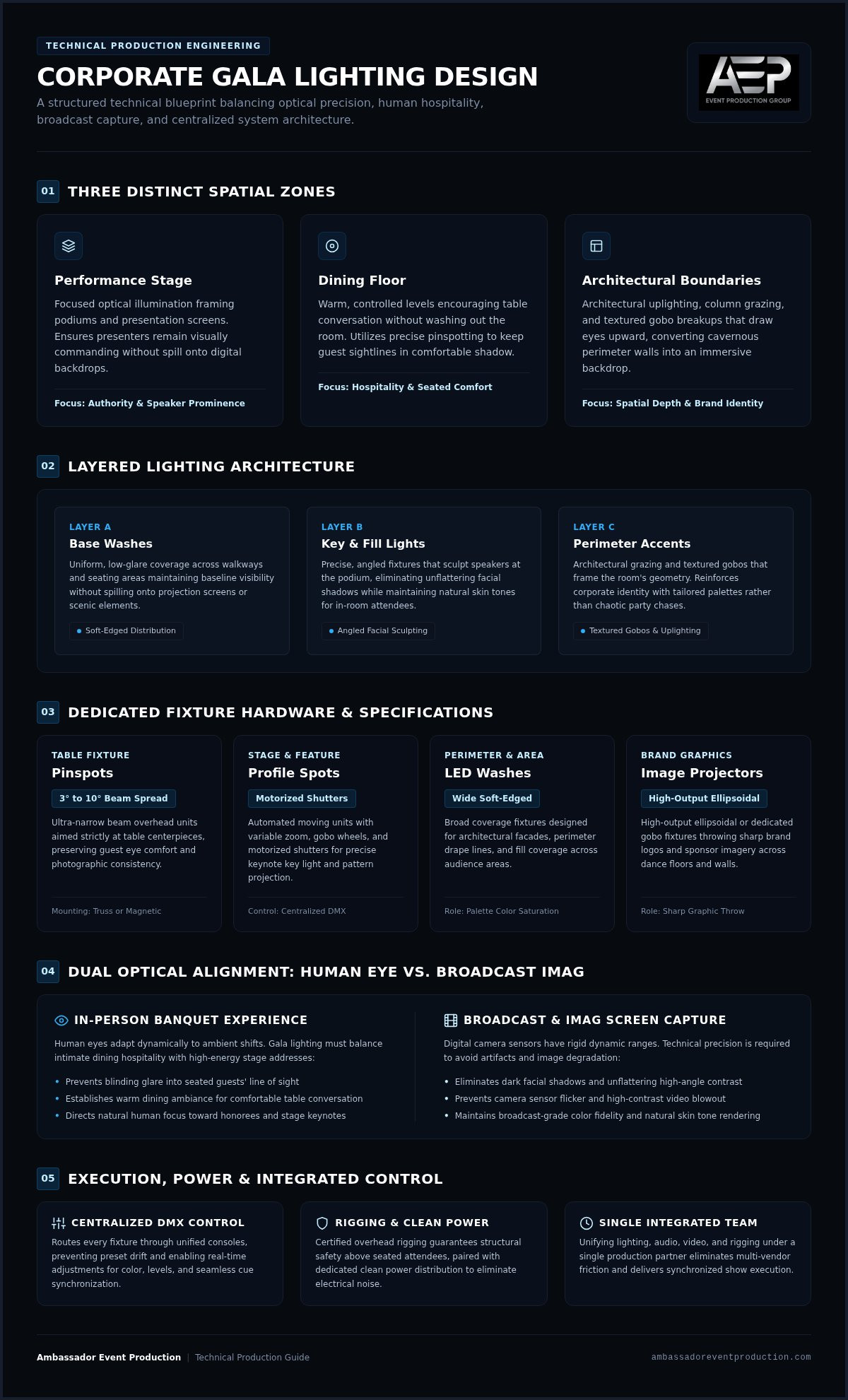
At its core, professional corporate gala lighting design is an engineered optical discipline, not a simple collection of decorative party rentals. While basic dry-hire setups scatter fixtures haphazardly around perimeter walls, an engineered plot deliberately directs guest focus, establishes emotional pacing, and reinforces corporate identity. It balances three distinct spatial zones: the performance stage, the dining floor, and the room’s architectural boundaries.
When company executives deliver milestone addresses or appeal to major benefactors, optical precision commands authority. Applying the foundational fundamentals of stage lighting ensures your speakers remain visually prominent against digital backdrops while guests enjoy an elevated, hospitable atmosphere. Without deliberate design, cavernous ballrooms dilute visual impact, leaving audiences distracted and disengaged.
Defining the Strategic Objectives of Corporate Gala Illumination
A gala must balance public prestige with personal hospitality. At the main stage, focused illumination frames the podium and presentation screens, ensuring attendees follow every key moment without distraction. Over the dining floor, warm and controlled levels encourage table conversation without washing out the room. Disciplined design relies on tailored brand color palettes rather than chaotic party chases, reinforcing institutional authority and inspiring donor generosity.
The Core Lighting Palette: Ambient Washes, Key Lights, and Accents
Delivering a balanced visual experience requires layering three essential fixture applications:
- Base Washes: Uniform, low-glare coverage across walkways and seating areas that maintains baseline visibility without spilling onto projection screens or scenic elements.
- Directional Key and Fill Lights: Precise, angled fixtures that sculpt speakers at the podium, eliminating unflattering shadows while keeping skin tones natural for in-room attendees.
- Perimeter Accents: Architectural uplighting, textured gobo patterns, and column grazing that draw the eyes upward, turning cavernous venue walls into a cohesive visual backdrop.
Weaving these three layers together creates an immersive environment that supports program pacing from opening remarks to the final toast.
Essential Gala Lighting Fixtures and System Architecture
Executing a high-performing corporate gala lighting design requires dedicated optical hardware and synchronized system architecture. Rather than relying on autonomous fixture presets that drift over time, professional installations route every unit through centralized DMX consoles. This centralized control allows operators to balance output levels, color palettes, and movement in real time. Incorporating foundational principles of lighting design ensures that fixture selection serves the program narrative rather than acting as visual clutter.
Every fixture class within the rig serves a dedicated operational purpose:
- Pinspots: Ultra-narrow beam fixtures (typically 3 to 10 degrees) positioned overhead to illuminate table centerpieces without blinding seated guests.
- Automated Profile Spots: Precision moving fixtures featuring motorized framing shutters, variable zoom, and gobo wheels for targeted key light and scenic projection.
- LED Washes: Wide, soft-edged units providing broad coverage across architectural facades, perimeter drape lines, and audience areas.
- Image Projectors: High-output ellipsoidal or dedicated gobo fixtures designed to throw sharp brand imagery across ballroom dance floors or side walls.
Pinspotting and Table Centerpieces: Precision Beam Control
Centerpieces draw guests into the dining space, but poorly aimed fixtures cause harsh glare. Using narrow-beam magnetic or truss-mounted pinspots confines the beam spread strictly to floral arrangements and decor, keeping guest eyes in comfortable shadow. Maintaining consistent color temperature across dozens of banquet tables simultaneously ensures that dining areas look polished in person and uniform across wider room photography.
Intelligent Moving Fixtures and Dynamic Stage Profiles
Automated profile fixtures with motorized framing shutters are indispensable for modern stages. These internal blades allow technicians to crop light tightly around the presenter and podium, preventing light from washing out high-resolution LED backdrop screens. When award recipients take the stage, these automated profiles track their entrance walk-ups seamlessly. You can explore fixture protocols in our technical guide to intelligent event lighting.
Architectural Uplighting, Textures, and Custom Gobo Projections
Plain ballroom perimeter walls quickly flatten the guest experience. Layering textured breakup gobos with linear LED batten washes brings depth and architectural interest to standard draping. High-definition glass gobos project sponsor marks with pinpoint edge sharpness, reinforcing visual branding throughout the venue. To evaluate custom optical plots tailored to your event venue, connect with the technical directors at Ambassador Event Production.
Engineering Gala Lighting for Both Human Eyes and Broadcast Cameras
A classic challenge in corporate gala lighting design lies in resolving the conflict between human vision and digital camera sensors. What feels like an intimate, candlelit ambiance to a banquet guest often reads as murky darkness to a high-definition camera. When front light lacks adequate intensity or coverage, live image magnification (IMAG) screens display muddy, noisy feeds with deep facial shadows under presenters’ brows and cheekbones. Bridging this gap requires precise optical engineering that preserves room warmth while delivering crisp feeds for broadcast capture and archival recording.
Achieving this balance is a primary focus when managing comprehensive corporate event video production services. Lighting and video teams must calibrate their equipment collaboratively well before doors open, ensuring that every speaker appears polished to attendees across the room and to remote stakeholders watching the live feed.
Managing Color Temperature (Kelvin) Across Stage and Audience
Corporate galas frequently mix 3200K warm tungsten hues across the dining floor with 5600K daylight-balanced digital backdrops on stage. Failing to manage these differences leads to unnatural orange or blue skin tones on camera. Technicians must standardize the white points of all front-of-house stage fixtures during afternoon setup, establishing a cohesive baseline that prevents camera sensors from hunting between divergent color temperatures.
High CRI and Flicker-Free Dimmers for Video Capture
Digital camera sensors require strict optical fidelity:
- 95+ Color Rendering Index (CRI): High-CRI fixtures render subtle skin tones and wardrobe fabrics accurately, avoiding the dull, greenish cast produced by lower-grade consumer LEDs.
- High-Frequency PWM Dimming: Pulse-width modulation (PWM) rates running above 25 kHz eliminate visible rolling shutter lines and camera flicker, especially when dimming stage washes down for video playbacks.
- Pre-Event Sensor Audits: Running full-scale camera checks during rehearsals verifies that fixtures dim smoothly without introducing unwanted sensor artifacts.
Balancing Contrast Ratios Against LED Video Walls
High-output LED backdrops can quickly overwhelm a stage, turning presenters into dark silhouettes if contrast levels drift. Stage technicians prevent this by calibrating key light foot-candles directly against the nit output of the LED wall. Introducing steep back-lighting and dedicated rim fixtures creates clean visual separation, pulling speakers forward so they stand out clearly against dynamic presentation graphics.
The Technical Execution: From Structural Rigging to Cue Programming
Bringing a corporate gala lighting design from concept to reality demands disciplined engineering long before show night. Ballrooms host hundreds of seated guests beneath suspended trusses, meaning that safety protocols, weight distribution, and electrical loads must be verified with certified rigor. When structural design and console programming align, technical transitions feel invisible, letting the evening flow naturally from quiet conversation to high-energy celebration.
Executing this seamless choreography requires tight integration with high-fidelity event audio production. When walk-up musical stings hit at the exact fraction of a second a follow spot locks onto an honoree, the ballroom crackles with prestige and purpose.
Rigging Engineering, Hanging Points, and Ballroom Weight Limits
Overhead rigging begins with comprehensive site surveying. Production engineers calculate motor loads, bridle angles, and dead hangs to guarantee every point operates well within venue structural ratings. When older venues or low ceilings restrict overhead rigging points, technicians engineer discreet ground-supported truss totems or low-profile pipe-and-base systems. Coordinating dedicated three-phase power drops early prevents breaker trips during peak stage lighting cues.
Programming the Run of Show: Atmosphere Transitions
A gala requires distinct optical treatments across its chronological phases:
- Guest Arrival and Cocktail Hour: Bright, inviting perimeter washes and warm architectural accents that welcome attendees and encourage easy mingling.
- Keynotes and Dinner Presentations: Softly dimmed house dining tables paired with concentrated front key light that directs attention entirely toward the podium.
- Live Auctions and Entertainment: Dynamic moving head chases, synchronized beam sweeps, and heightened stage energy that build momentum and spur audience engagement.
Synchronizing Lighting Cues with Video and Audio Feeds
Modern run-of-show execution relies on centralized cue triggers. Whether using SMPTE timecode or a seasoned calling technical director, lighting cues must fire in tight harmony with playback video and live microphones. When an awards video finishes rolling, the house lighting should gently bloom while spotlight operators pick up the award recipient navigating between banquet tables. If you are coordinating a complex multi-layered plot, partner with Ambassador Event Production to manage your structural rigging, audio feeds, and lighting plots under one experienced technical team.
Selecting an Integrated Technical Production Partner for High-Stakes Galas
Hiring disparate vendors for lighting, audio, video, and rigging is one of the most common sources of friction during a major corporate gala. When lighting plots cast glare across video screens or rigging schedules bottleneck the venue loading dock, event organizers get caught in the middle. Unifying these disciplines under a single production umbrella ensures your corporate gala lighting design works in complete synergy with your cameras, displays, and sound reinforcement.
As explored in our comprehensive guide to technical event production, cohesive technical direction provides the operational safeguard organizations need when executive reputations and donor relationships are on the line.
The Perils of Fragmented AV Vendors vs Integrated Technical Teams
Dividing production responsibilities among siloed vendors introduces severe communication gaps. When an unexpected power draw trips a circuit or an optical wash bleeds onto an IMAG shot, separate contractors often point fingers rather than solve the issue. In contrast, an integrated technical team shares overhead truss structures safely, manages venue dock time methodically, and operates under one master technical director. This cohesive approach guarantees that lighting, video, and audio cues fire with exact precision.
Critical Technical Questions to Ask Your Lighting Production Team
Before contracting a technical production partner, ask targeted questions to verify their operational capability:
- Redundancy: Do you deploy primary and backup lighting consoles with instant failover network switching?
- Safety and Standards: Are your crew leads certified in structural rigging, motor control, and temporary electrical distribution?
- Camera Verification: Can you provide portfolio examples demonstrating balanced key lighting against high-output LED video walls?
Partnering with Ambassador Event Production for Flawless Execution
Founded in 1955, Ambassador Event Production brings over seven decades of technical staging, lighting, and audio-visual expertise to high-stakes events nationwide. As a family-owned and operated partner, we take personal pride in every plot we design and every cue we execute. Our dedicated technical execution teams handle the structural calculations, optical engineering, and show calling so your organization can focus entirely on celebrating its honorees and inspiring its stakeholders.
Elevating Your Next Gala Through Integrated Technical Mastery
An exceptional gala doesn’t happen by accident. Transforming an expansive ballroom into an engaging, prestigious environment requires an engineered approach where color balance, camera fidelity, and certified rigging work as one. When you prioritize purposeful corporate gala lighting design, your stage presenters command authority, your guests feel genuinely welcomed, and your live video capture remains sharp and noise-free.
Executing that level of optical sophistication demands a production partner that sees the entire technical picture. Founded in 1955, Ambassador Event Production is a family-owned technical production partner serving national corporate clients with quiet confidence and proven reliability. We integrate video, audio, lighting, and structural rigging under unified direction, managing every critical engineering role with seasoned in-house technicians rather than outsourcing to disconnected subcontractors. Let’s ensure your next presentation leaves a lasting mark on every attendee in the room. Collaborate with our technical team to bring seamless lighting and production to your next gala.
Frequently Asked Questions
What is the difference between gala lighting design and standard event lighting?
Professional corporate gala lighting design is an engineered optical plan balancing stage visibility, dining ambiance, and broadcast video fidelity, whereas standard event lighting typically relies on static decorative wash packages or basic perimeter uplighting. Gala design requires precision beam profiling, synchronized cue execution with audio and video, and strict optical calibration to flatter executives on stage and guests at dinner tables without washing out presentation screens.
How much power is required for a large-scale corporate gala lighting rig?
A full gala lighting setup generally requires dedicated three-phase electrical distribution ranging from 100 to 400 amps depending on fixture density and motor loads. While modern LED fixtures draw significantly less amperage than legacy tungsten, automated moving profiles, follow spots, and motor hoists still demand dedicated tie-ins. Technical directors calculate total wattage and balance circuit legs during venue walkthroughs to prevent tripped breakers during high-output program cues.
Why does stage lighting look different in person compared to video camera recordings?
Human eyes process dynamic contrast and color shifts far better than digital camera sensors. A lighting setup that feels warm and dramatic to seated banquet attendees can appear dark, muddy, or noisy on IMAG cameras without adequate foot-candles and high Color Rendering Index ratings. Stage illumination must balance intensity, high-frequency pulse-width modulation dimming, and complementary back-lighting so presenters stay defined against LED video backdrops on screen.
Can corporate gala lighting be rigged in ballrooms without ceiling hang points?
Yes, professional production teams routinely execute complex corporate gala lighting design plots in venues without certified overhead hang points. Technicians deploy engineered ground-support structures, including heavy-base truss totems, corner goalposts, and low-profile pipe-and-base uprights. These freestanding systems position front washes and profile spots at optimal angles while maintaining strict weight stability margins and preserving clean sightlines across the dining room.
How do pinspots enhance the guest experience at formal fundraising galas?
Pinspots use ultra-narrow beams focused directly onto floral arrangements and tabletop centerpieces, making center decor pop while leaving guest seating in comfortable, flattering shadow. By illuminating table surfaces without casting glare into attendees’ eyes, pinspots create an intimate dining ambiance that encourages social conversation. They also provide sufficient ambient light for reading auction programs without elevating overall house lighting levels.
Why is hiring an integrated technical production company better than multiple separate vendors?
Contracting an integrated technical provider eliminates vendor miscommunication, loading dock congestion, and conflicting equipment layouts. When lighting, video, audio, and certified rigging operate under one technical director, cues synchronize seamlessly across departments without finger-pointing. It ensures lighting fixtures don’t wash out projection screens, audio walk-up stings align instantly with stage spotlights, and all equipment shares available electrical drops efficiently.