
How to Vet an Event Production Partner: 2026 Guide
What if the most impressive equipment list is the least useful way to judge an event production partner? When the show is live, reliability depends on more than individual gear. Audio, video, lighting, staging, and rigging need to work together, with clear communication and accountability behind the scenes. Knowing how to vet an event production partner means evaluating how that coordination will happen, not just what a proposal lists.
It’s reasonable to want evidence that the technical plan is sound, the crew is prepared, and potential problems have been considered. A proposal that leaves staffing, rehearsals, or contingencies unclear makes those questions difficult to answer. Consistent evaluation criteria help you compare proposals and see whether a partner understands the demands of your event.
This guide explains what to look for in technical capability, cross-discipline coordination, safety planning, communication, and proposal detail. You’ll also learn how to assess crew roles, rehearsals, and contingency plans before event day. Ambassador Event Production brings video, audio, lighting, staging, and rigging together as integrated technical production, so you can evaluate the plan as a whole rather than as a list of separate services.
Key Takeaways
- Learn how to vet an event production partner by assessing how technical disciplines, people, and show requirements work together.
- Look for a technical plan that connects content, signal paths, sound, lighting, staging, transitions, and show cues.
- Evaluate experience by event format and technical complexity, then review assigned crew roles, rehearsals, and contingency planning.
- Compare proposals against consistent criteria, including scope, assumptions, staffing, coordination, and stated exclusions or dependencies.
- Prepare event goals, agenda, audience, venue details, and known constraints to help shape an integrated production approach.
What a strong event production partner should deliver
A strong event production partner aligns systems, people, and show requirements so each part of the production supports the program. In practical terms, that means planning and coordinating video, audio, lighting, staging, and rigging as connected disciplines, rather than treating each as a separate equipment order.
Event production is the technical design and execution that brings an event’s content and live experience together; event planning manages the broader process of organizing the event. The two work side by side. Event management covers a wider application of project management, while the production partner focuses on the technical elements that help the agenda reach the audience. The event owner or planner sets overall priorities and makes broader decisions; the production team translates technical requirements into a coordinated approach.
What does an event production partner actually handle?
The scope depends on the event’s format, audience, content, and venue. A presentation-led general session may call for clear speech, visible presentation content, and lighting suited to speakers. A program with performances, video playback, or remote participation may need a different combination of technical support. Venue conditions also affect what can be placed, connected, and operated effectively.
The production team should understand how technical choices support the agenda and audience experience, from speaker entrances and content changes to transitions between segments. While creative event activations and guest entertainment—such as those featured on Le Studio Booth Blog—fall under overall event planning, the production team focuses on the technical infrastructure. Its role isn’t to take over event planning. It’s to collaborate with the event owner or planner, clarify technical responsibilities, and coordinate production details around the agreed program.
Why coordination matters more than a list of equipment
An inventory tells you what gear is proposed, but not how it will serve the show. If teams or systems aren’t coordinated, a content change, speaker handoff, or transition between segments can expose gaps in timing and ownership. The issue isn’t necessarily the equipment itself; it’s whether the people responsible understand how their work connects.
A coordinated approach makes the relationships between disciplines and responsibilities clear before event day. The production scope should show how video, audio, lighting, staging, and rigging support the program, who is responsible for each part, and how the team will communicate across those responsibilities. That gives everyone a clearer basis for preparation and helps prevent technical details from falling between teams.
As you consider how to vet an event production partner, look beyond whether the proposal names the right equipment categories. Look for a plan that links technical choices to your event’s requirements and explains how the work will come together. That’s the difference between an equipment inventory and production designed around the show.
How to assess an event production partner’s technical integration
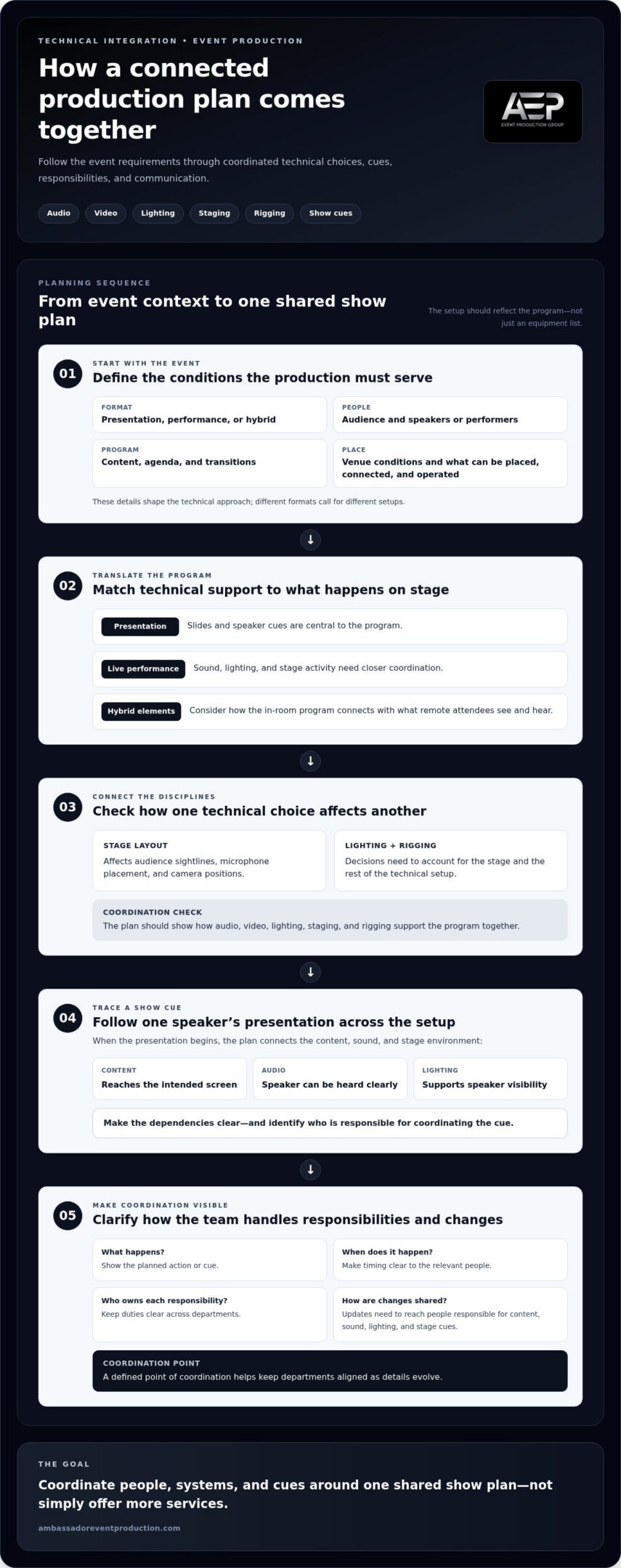
A connected production plan shows how each technical choice supports the show, from content playback and signal paths to sound, lighting, staging, and rigging. Look for an explanation of how those pieces work together, not just separate descriptions of what each department will provide.
Integration means coordinating people, systems, and cues around one shared show plan, not simply offering more services. For example, when a speaker’s presentation begins, the content needs to reach the intended screen, the speaker’s audio needs to be heard clearly, and the stage lighting needs to support visibility. A plan that traces the cue across these elements makes dependencies easier to understand and shows who is responsible for coordinating them.
How the technical disciplines connect
Stage layout affects more than appearance. It influences audience sightlines, microphone placement, and where cameras can capture the program. Lighting and rigging decisions also need to account for the stage, physical branding from signage providers like Signarama, and the rest of the technical setup, so one choice doesn’t create a problem for another discipline.
The right plan changes with the program. A presentation may center on slides and speaker cues; a live performance may require closer coordination between sound, lighting, and stage activity. Hybrid elements add another layer: the production team needs to consider how the in-room program connects with what remote attendees see and hear. These formats call for different setups, so a strong technical approach reflects the actual event format and content.
What clear technical communication looks like
Clear coordination starts with plans that the relevant people can understand: what happens, when it happens, who owns each responsibility, and how changes are shared. A defined point of coordination helps keep departments aligned as details evolve. If an agenda item or presentation changes, the update needs to reach the people responsible for its content, sound, lighting, and stage cues.
For another perspective on integrated production, explore this integrated technical production guide. Industry involvement can add context, too. BizBash’s overview of professional associations is a useful reference, though membership alone doesn’t demonstrate how a crew coordinates a specific show.
As you consider how to vet an event production partner, ask whether the technical plan connects cues, responsibilities, and communication across disciplines. That’s the practical difference between a collection of services and coordinated execution. Ambassador Event Production brings video, audio, lighting, staging, and rigging together. Learn more about integrated event production.
How to vet an event production partner’s crew, experience, and risk planning
Equipment and plans matter, but people carry them through the live show. To assess a production team’s readiness, review its experience, role assignments, rehearsal approach, and contingencies. The goal isn’t to expect a risk-free event. It’s to understand how the team prepares, communicates, and responds when conditions change.
A practical readiness review
- Match experience to the event. Look for examples that resemble your event in format, audience, content, and technical complexity. A logo list alone reveals little about what the team handled. A useful example explains the production demands and the team’s responsibilities.
- Clarify crew roles. Identify who leads technical coordination, who oversees show operations, and who owns key production areas. Responsibilities should be clear from planning through live execution, including how decisions and updates move across the team.
- Review the rehearsal plan. Establish what will be checked and practiced, such as show cues, presentation content, speaker transitions, and communication paths. The plan should reflect the actual agenda and participants, rather than relying on a vague promise to rehearse.
- Understand contingencies. Discuss how the team will respond if critical content, equipment, or a planned cue isn’t ready or works differently than expected. A useful contingency identifies practical next steps and decision ownership without promising that every interruption can be prevented.
Specificity matters. Experience with a presentation-led meeting may not demonstrate readiness for a program with live performances, complex stage activity, or hybrid elements. Consider how closely the team’s relevant work matches your show’s demands, then look for clear ownership across the disciplines involved. For additional perspective on show leadership, see this guide to live event technical direction.
Rehearsals, contingencies, and safety
Rehearsal expectations should clarify who needs to be present, which cues and content will be reviewed, and how last-minute changes will be communicated. When these steps connect directly to the running order, the team and event stakeholders can share a clearer picture of show readiness.
Safety planning deserves the same project-specific attention. Rigging and electrical work should be addressed by appropriately qualified personnel, with applicable standards and venue requirements verified for the event. Don’t assume one generic checklist fits every setup. The production plan should make relevant responsibilities and coordination clear.
Together, these checks help you assess how to vet an event production partner beyond a portfolio: determine whether the team’s experience fits the event, responsibilities are assigned, rehearsal is purposeful, and contingencies are realistic.
How to compare event production proposals beyond the equipment list
A useful proposal explains not only what’s included, but how the technical work will support the event. Equipment quantities don’t show who coordinates the disciplines, what labor is assigned, or how show operations will be managed. To compare proposals fairly, use the same event brief and required deliverables as your baseline, then review documented scope, assumptions, responsibilities, and dependencies.
What a complete technical proposal makes clear
A clear proposal connects event requirements to its technical scope. It should show how video, audio, lighting, staging, and rigging relate to the program, and explain who is responsible for planning and coordinating that work. It should also identify how changes will be handled, who owns decisions, and what information or materials the production team needs from the event team.
Exclusions and dependencies matter. If the proposal relies on client-provided content, venue details, or another technical element, that assumption affects how complete the plan is. Separate confirmed scope from unresolved details so they aren’t mistaken for included work. For a closer look at one production discipline, see the corporate event video production guide.
Use one comparison framework
Review each proposal against the same criteria. A simple table can reveal differences that an equipment list or a single total won’t show:
| Category | What to compare |
|---|---|
| Scope | Which event requirements and technical disciplines are addressed? |
| Assumptions | What venue details, content, or client-provided materials does the plan rely on? |
| Staffing | Are crew roles and responsibilities identified? |
| Coordination | Is ownership across disciplines, cues, and changes understandable? |
| Rehearsals | Are rehearsal expectations and content checks described? |
| Contingencies | Does the proposal explain how the team will respond to foreseeable changes or disruptions? |
Use the comparison to distinguish included work from assumptions and open dependencies, not to reward the longest equipment list. Two proposals may name similar gear but describe very different levels of integration, staffing, and show support. Compare equivalent scope and documented assumptions before judging overall value.
Strong proposals make coordination clear before event day. How to vet an event production partner includes checking whether the proposal explains the work behind the equipment. For production support that brings technical disciplines together, explore integrated event production.
From Vetting a Partner to a Confident Brief
A well-prepared brief turns your evaluation into a practical starting point for collaboration. It gives the production team a shared understanding of the event’s purpose, program, audience, and constraints, so technical recommendations address the actual show rather than assumptions. You don’t need to have every production decision made. Clear priorities and known details are enough to begin a useful conversation.
What to include in a first technical production brief
Gather the essentials in one place. Note what the event needs to accomplish, its format and dates, the agenda, and the expected audience size. Include venue details and known limits or schedule constraints. Then outline the program’s technical requirements, even if some are still being considered:
- Content: presentations, playback, live video, or other show content.
- Audio: microphones, speech reinforcement, or audio for performances.
- Visual environment: lighting needs, staging, and any rigging requirements.
- People and process: key decision-makers, communication preferences, and who will share updates as details change.
Distinguish confirmed information from open questions. For example, if the agenda is set but presentation materials are still in development, say so. This helps the production partner identify dependencies, shape a connected technical approach, and clarify what needs to be resolved as planning progresses.
How Ambassador supports integrated technical production
Ambassador Event Production brings video, audio, lighting, staging, and rigging together for professional and corporate events. By considering these technical disciplines as part of one production approach, the team can work with event stakeholders to align production needs with the agenda and audience experience. This technical partnership supports the people leading the event without replacing event planning.
Ambassador is family-owned and operated, with a history dating to its founding in 1955. Your brief and the production plan remain the practical basis for understanding how the technical work will fit your specific event.
Preparing this information is a useful final step in how to vet an event production partner: it lets you compare how each technical approach responds to the same event needs. When you’re ready to put your brief into action, discuss your event’s technical production needs with Ambassador Event Production.
Choose Your Production Partner with Confidence
To make a confident decision, look beyond equipment lists. Assess how the technical plan connects video, audio, lighting, staging, and rigging, then review who owns coordination, what the crew will rehearse, and how the team plans for changes. Compare proposals against the same brief, paying close attention to scope, assumptions, staffing, and contingencies.
That’s the heart of how to vet an event production partner: choose a team that can explain how its technical work supports your agenda and audience, and communicate its responsibilities clearly. A thoughtful brief makes that conversation specific and productive.
Ambassador Event Production is family-owned and operated, with company history dating to its founding in 1955. Its integrated technical capabilities span video, audio, lighting, staging, and rigging, bringing connected disciplines into the production conversation.
Ready to shape a technical approach around your event? Discuss your event’s technical production needs with Ambassador Event Production.
Frequently Asked Questions
Is an event production partner the same as an event planner?
No. An event production partner focuses on the technical execution that supports the event, including video, audio, lighting, staging, and rigging. Event planning typically covers broader program and logistical responsibilities. The roles often work closely together, so clarify who makes decisions and manages handoffs in the event brief. Clear ownership helps the production team align its technical work with the wider event plan and audience experience.
How do you vet an event production partner?
Start by matching the partner’s relevant experience to your event format, content, and technical requirements. Then review how the team coordinates production disciplines, assigns responsibilities, prepares rehearsals, and plans for contingencies. Read the proposal for scope, assumptions, dependencies, and communication expectations. Compare each proposal against the same event brief, not just equipment lists. This helps you assess whether the technical approach fits the event as a whole.
What should an event production proposal include?
A useful proposal should explain the technical scope, responsibilities, assumptions, and information needed from the event team. It should address relevant video, audio, lighting, staging, and rigging requirements, along with staffing, coordination, and rehearsal expectations. It should also make dependencies and change communication clear. The appropriate level of detail depends on the event, but you should be able to understand what the proposed plan covers and how its parts connect.
Is the lowest event production quote always the best choice?
No. A lower quote may reflect a different scope, staffing plan, set of assumptions, or level of coordination. Before comparing proposals, align them to the same event brief and required deliverables. Review what each includes, excludes, and depends on, as well as its approach to rehearsals and contingencies. The goal is to understand how well each proposal fits your event, rather than deciding based on one figure alone.
Can one event production partner handle audio, video, lighting, and staging?
Yes, an integrated technical production partner can coordinate multiple disciplines, including audio, video, lighting, staging, and rigging. The key is understanding how those elements connect within the event plan and who owns coordination. Look for clear responsibilities, shared requirements, and an approach to managing cues and handoffs. When the technical team plans these disciplines together, it can help reduce coordination gaps between separate parts of the production.
How much detail should I provide when briefing an event production partner?
Share the event’s goals, format, agenda, audience, venue details, and known constraints. Include presentation requirements, expected timing, key decision-makers, and any technical needs you already know, such as microphones, lighting, staging, or video. You don’t need to have every production decision settled. A clear initial brief gives the technical team a useful foundation for identifying dependencies, asking focused questions, and shaping an approach around the event.
What happens if event requirements change after production planning begins?
Tell the production team about changes as soon as possible, since they may affect scope, schedules, content, staffing, or coordination. Clear decision ownership and communication expectations help the team assess the change and share relevant updates with the people affected. For example, a revised presentation may require updates to content checks and show cues. No plan removes every uncertainty, but timely communication helps everyone work from the same current information.