
Creative Stage Design Examples for Conference Backdrops and Sets
A conference stage is more than a backdrop. The strongest creative stage design ideas for conferences bring scenic elements, venue features, branded sets, projection, screens, lighting, and sound together in a coherent experience. A well-planned design supports the event theme while keeping speakers and presentations clear for the audience.
It is easy to focus on a dramatic screen or striking set piece, but effective designs consider how every element works in the room. Backdrops, architecture, stage layout, and visuals all shape the audience’s view and the feel of the event.
This guide explores five design themes and practical examples, from using a venue’s existing features to creating depth with layered scenery, branded sets, and shaped displays. You’ll also see how projection, screens, and lighting can bring an idea to life while keeping the stage suited to the event space.
Key Takeaways
- Plan lighting, sound, screens, and scenic elements as one stage design so each part supports the presentation.
- Use venue architecture as part of the backdrop, and choose materials and finishes that suit the room and camera views.
- Build visual depth with layered platforms, branded details, and modular scenic pieces without crowding the audience.
- Match projection mapping and screen shapes to the event’s content, theme, and viewing angles.
- Choose a design direction, such as immersive, architectural, or minimalist, then carry it consistently through the stage elements.
What does Stage Design include?
Stage design coordinates scenic elements, lighting, sound, screens, and projection so the room supports the event’s content. A keynote, for example, might pair a branded backdrop with clear speaker lighting and crisp presentation visuals. Each element should work together rather than compete for attention.
What lighting, LED screen, and projection options work best for conference stages? Choose LED screens for readable presentations or motion graphics, and use projection when imagery needs to cover scenic surfaces. Moving-head fixtures, uplighting, and color washes can shape the mood. Set brightness and color so speakers and visuals remain legible.
What stage layouts work best for panels, keynote speakers, and audience interaction? A centered lectern or open platform suits a keynote, while a panel needs seats arranged so speakers can see one another and the audience. A 360-degree setup places the speaker at the audience’s center, encouraging interaction when sightlines work around the room.
What accessibility and safety requirements apply to conference stages in the United States? Incorporate accessible routes and participation into the layout, and keep exits, walkways, and sightlines clear. Secure cables and scenic elements, and coordinate stable staging and access with the venue’s event requirements.
What are sustainable and reusable materials for conference stage design? Reusable spandex can form a lightweight backdrop and take on color from lighting. Modular interlocking stage pieces can also be reconfigured and reused, so each layout does not need to start from scratch.
How do you plan and build a conference stage design, from concept to event day? Start with the event theme, room dimensions, audience view, and presentation needs. Map the stage, backdrop, screens, lighting, sound, and setup sequence, then test presentations and transitions in the room before doors open.
What are common conference stage design mistakes and how can they be avoided? Avoid screens that overwhelm the set, decorative lighting that obscures speakers, and layouts that block audience views. Review sightlines, legibility, and transitions together instead of approving scenic and technical elements in isolation.
Color can transform a simple backdrop into an impressive focal point. Spandex takes colored lighting, while nested panels that decrease in size add depth. A light wash can emphasize their layers without distracting from the speaker. Shelving can add dimension and hold props, as long as those details support the event theme.
Samsung’s 2019 Unpacked event shows how a screen can become scenery. Situation: the stage needed a large visual backdrop. Action: a separate LED screen measured 19.2 by 19.2 meters. Result: the screen formed a substantial visual element behind the stage. A 360-degree screen offers another approach, surrounding attendees with projected cityscapes or nature imagery.
For a balanced design, position the screen where attendees can read it, aim light at speakers, and keep scenic panels from blocking projection. Test slides, colored lighting, and audio together from audience seats as a final check. This coordinated review helps every stage element support the presentation.
Backdrops, draping, and venue features
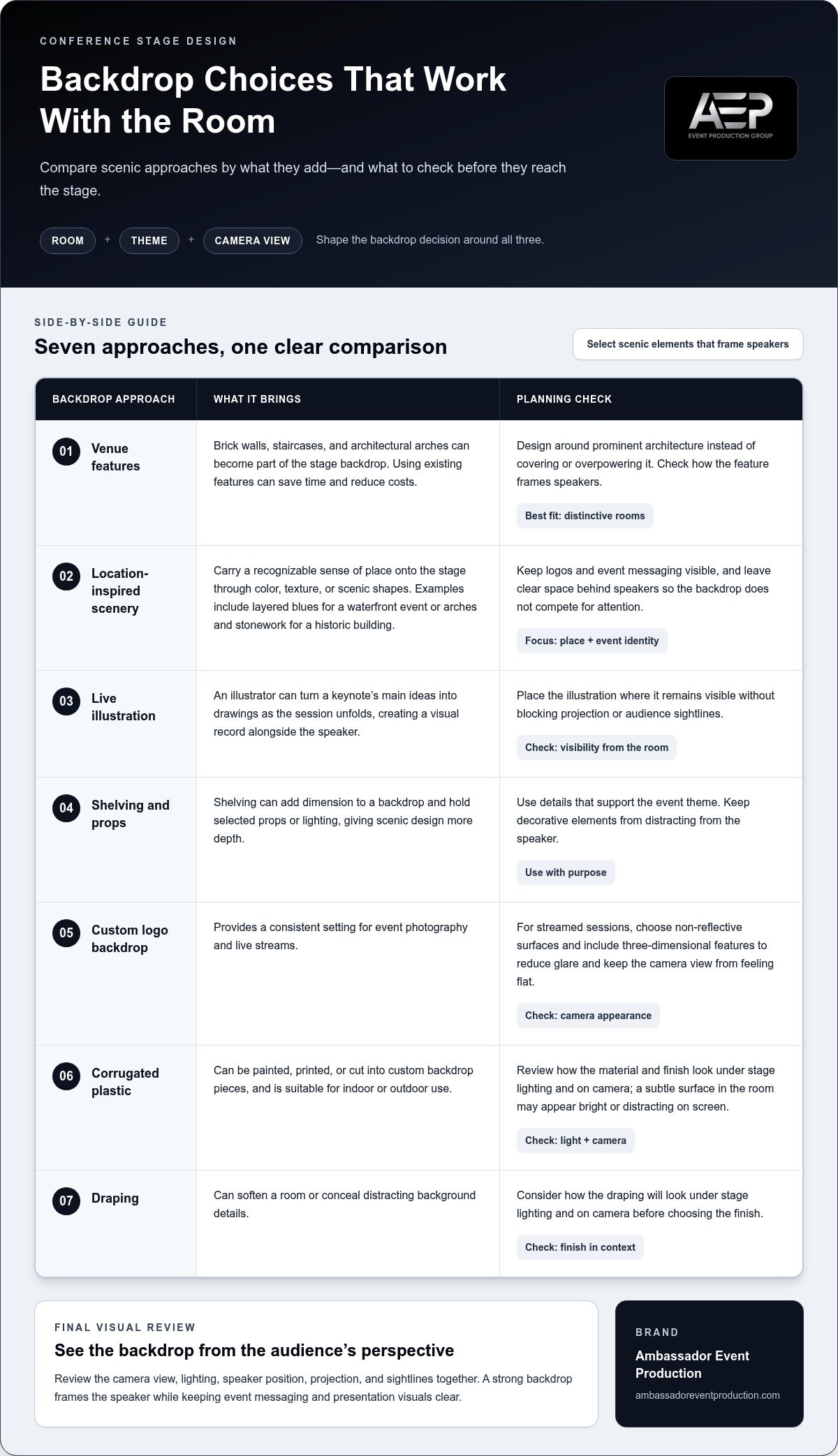
A backdrop should frame speakers while fitting the venue, event theme, and camera view. Start by identifying the room’s strongest feature, such as a brick wall, staircase, or architectural arch. Using built-in walls or staircases as part of the stage can save time and reduce costs. In venues with prominent architecture, design around those details instead of covering or overpowering them.
For a location-inspired design, bring a recognizable feature of the setting onto the stage through color, texture, or scenic shapes. A waterfront event might use layered blue tones; a conference in a historic building could echo its arches or stonework. Keep logos and event messaging visible, and leave clear space behind speakers. This balance makes the backdrop distinctive without competing for attention.
Live illustration creates a dynamic backdrop that evolves during a session. An illustrator, for example, can translate a keynote’s main ideas into drawings as the talk unfolds. This works well when the presentation benefits from a visual record: images develop in real time alongside the speaker. Plan the placement so the illustration remains visible without blocking projection or audience sightlines.
Decorations add dimension when they serve a clear purpose. Shelving can create a three-dimensional backdrop while displaying selected props or lighting. Custom logo backdrops provide a consistent setting for event photography and live streams. For streamed sessions, choose non-reflective surfaces and include three-dimensional features to reduce glare and keep the camera view from feeling flat.
Material and finish affect both appearance and function. Corrugated plastic can be painted, printed, or cut into custom backdrop pieces, and it suits indoor or outdoor use. Draping can soften a room or conceal distracting background details. Before choosing either, consider how the surface will look under stage lighting and on camera. A finish that seems subtle in the room may appear bright or distracting on screen.
Large-scale decoration can make a stage memorable. At the 2022 Oscars, the stage set included 12,940 Swarovski crystals and 252 strands. Situation: the set needed a distinctive visual feature. Action: crystals and strands formed part of the scenic design. Result: the decoration added texture and visual detail to the stage.
Reusable scenic structures can also support a thoughtful design. The Wall Street Journal’s 2023 Future of Everything Festival used a modular trellis that was reassembled in a park the following day. That example shows how a backdrop structure can serve the event and continue beyond it. For a cohesive result, coordinate backdrop, draping, projection, and decoration early; stage lighting design can help bring the visual elements together.
Company-logo backdrops can reinforce branding in photographs and live streams. Stages should complement prominent architecture, while streaming designs can benefit from non-reflective surfaces paired with three-dimensional elements.
Creative conference staging and branded sets
Branded staging works best when the platform, backdrop, and screen content tell one clear story. Choose a visual idea tied to the event’s message, then repeat its colors, logo, and graphic style across those elements. The result is a consistent look and a recognizable focal point for attendees at corporate events.
How can a small conference create an impactful stage on a limited budget? Focus on one strong branded backdrop, a compact modular platform, and purposeful lighting instead of a complex set. Use the venue’s existing architecture and repeat a few graphic elements across the stage and presentation slides.
Start with the audience’s view. A low platform may suit a small room, while multi-level staging can add depth and help attendees see speakers in a larger space. For outdoor venues or temporary event spaces requiring sturdy platforms and protective structures, equipment specialists like VMS Event Rental (VMS Group) provide essential staging and marquee infrastructure. Keep the stage footprint appropriate to the room, with clear sightlines between seats, the platform, and presentation screens. Every scenic element should earn its place.
LED video walls can do more than display static logos. They can show motion graphics, live social media feeds, and scene changes that follow the program. At a product showcase, for example, a clean branded screen can introduce the product, then shift to supporting visuals during the speaker’s explanation. Use transitions to direct attention, not distract from the message.
Brand storytelling can also come from the format of the event. Situation: the 2020 GO WEST conference used a main stage designed for a concert-inspired experience. Action: the format had no emcee or podiums. Result: its staging departed from a conventional speaker-and-lectern setup, making the stage format itself part of the event’s identity.
For a more open presentation style, a transparent acrylic or glass podium can keep the stage visually uncluttered. Pair a clear lectern with restrained logo treatment and a backdrop featuring the main brand colors. This keeps speakers in view and gives event photography and live video a consistent frame.
Reusable set pieces can support several events without repeating the same layout. Modular, interlocking stage pieces can be reconfigured for different room plans, while a trellis can hold scenic details and lighting. The Wall Street Journal’s 2023 Future of Everything Festival used a modular trellis designed for reuse after the conference. Situation: the festival needed a distinctive structure. Action: it used a modular design. Result: the trellis could serve beyond the event.
To keep branding consistent, prepare a simple visual plan before choosing scenic pieces. Specify logo placement, approved colors, screen graphics, and how the stage should look during speaker introductions and transitions. Then review the full composition from audience seats. This helps organizers catch competing visuals before they dilute the event’s message.
Projection mapping and shaped display screens
Projection mapping turns scenic surfaces into moving visual content. Instead of treating a screen as a separate backdrop, designers can map imagery onto walls, arches, or sculpted scenery. A conference opening, for example, might use shifting graphics to introduce its theme, then settle into a clean presentation display. The effect works best when visuals support the program rather than compete with speakers.
Three-dimensional scenic elements give projection more shape and depth. Angled panels can catch different images, while a sculpted surface can make a brand motif appear to move across the stage. Before designing content, identify the projection surfaces and audience viewing angles. This helps keep key text and imagery visible from seats across the room.
Projection floors can extend a visual concept beneath speakers or performers. A mapped pattern might suggest movement during an entrance, then shift to a restrained texture for a presentation. Keep essential text off the floor, where perspective and people onstage can affect readability. Test the content with the actual stage layout, lighting, and camera positions.
LED arches offer another way to frame a stage and create an immersive entrance. At Samsung’s 2019 Unpacked event, two connected stage arches each measured 43.2 by 25.6 meters. Situation: the event needed a large-scale visual frame. Action: connected arches shaped the display. Result: the stage gained a dramatic, architectural form for its visuals.
A surrounding screen can make the audience part of the visual environment. Charity: Water’s 2019 West Coast gala used a 360-degree screen built from 840 LED tiles. Situation: the gala needed an immersive display. Action: the screen encircled the space with imagery. Result: attendees could experience visuals around them, rather than only in front of them. Cityscapes or nature scenes can create a similar sense of place.
Screen shape should match the content. The Life Sciences Trainers and Educators Network Annual Conference used a triple-wide screen for presentations. This format can separate slides, speaker video, and supporting visuals into distinct display areas. Concentric screens, arranged from smaller to larger, create depth while showing customized colors and images. Choose a layout based on where speakers stand and what viewers need to read.
For streaming, design graphics for both the room and the camera frame. A wide scenic display may look impressive in person but crop awkwardly on video. Frame speakers against readable content, make transitions deliberate, and synchronize projection with music only when it serves the moment. A coordinated technical rehearsal can reveal mismatches in screen content, camera framing, and stage lighting before the event begins.
Using these creative stage design ideas for conferences from Ambassador Event Production can make it easier to immerse attendees in an event. Projection mapping can transform stage surfaces with dynamic visuals and can be synchronized with music or performances. The 2023 Oscars stage incorporated about 3,500 square feet of high-resolution LED screens. This gives designers a large visual canvas, while mapped imagery can respond to the rhythm of the program.
Five design themes for event stages
A useful stage theme gives the audience a visual idea to follow, not just a color scheme. Conference examples reflect practical directions such as immersive screens, modular scenery, reusable structures, and lighting that shapes a room’s mood. Choose an approach that fits the program, venue, and message.
What are the latest conference stage design trends? Immersive displays, modular and reusable scenic pieces, and lighting-led transformations are practical directions for today’s stages. The best fit is the approach that reflects the event’s purpose and works for its audience.
- Immersive environment: Place speakers within the visual story rather than in front of a single flat screen. A 360-degree stage puts the speaker at the audience’s center, encouraging interaction when attendees have clear views from around the room. Use projected cityscapes for an urban innovation theme or nature imagery for a sustainability program. Keep essential presentation content easy to read.
- Architectural frame: Use arches, a trellis, or the venue’s existing structure to give the stage a distinct outline. Samsung’s 2019 Unpacked event used two connected stage arches, each measuring 43.2 by 25.6 meters. For a corporate event, a smaller frame can echo a company’s visual identity without overwhelming the room. Lighting can highlight the frame while leaving speakers prominent.
- Layered editorial: Arrange scenic panels, steps, or screens at different depths to create a composed, dimensional look. This theme suits a leadership summit where the stage should feel focused rather than theatrical. Use a restrained color palette, then apply lighting to distinguish speakers from the backdrop. In a smaller venue, modular staging can draw attention without crowding the audience.
- Reusable modular set: Build the visual environment from pieces that can be rearranged for different sessions or events. The Wall Street Journal’s 2023 Future of Everything Festival used a modular trellis designed for reuse after the conference. Situation: the festival needed a distinctive stage feature. Action: it used a modular structure. Result: the trellis could serve beyond the event.
- Tactile fabric and light: Use fabric, texture, and color to create a warm atmosphere without relying on a large display. Spandex can be shaped and illuminated with colored lighting, making it suitable for a flexible backdrop. For example, soft fabric and a warm color wash can make a conference reception feel more welcoming than a stark, high-contrast stage.
Use these five themes as starting points, then test your preferred direction against the venue, program, and camera views. The Vibe Guide to event stage design includes five themes and five moodboards, along with scenic elements and textures for bringing themes to life. For a design built around color and atmosphere, plan your stage lighting design to support the theme and keep attention on the speakers.
Ambassador Event Production: Video Production Services
Ambassador Event Production brings video production, audio-visual technical support, audio production, and lighting design together for conferences that need coordinated technical production. Turn to the team when your stage concept calls for screens, recorded or live video, clear presentation audio, or lighting designed to support speakers and visuals.
Aligning these elements early connects the creative direction with the technical requirements. A branded stage with projection, for example, needs visuals, audio, and lighting considered together so the room and camera views support the same experience. The right combination depends on the program and how you want attendees to experience it.
To discuss technical production for your conference, contact Ambassador Event Production or visit ambassadoreventproduction.com.
Turn Your Stage Concept Into an Event-Ready Experience
The next step is to turn your preferred visual direction into a practical production brief. Define what the audience should notice, what speakers need onstage, and how the experience should look in the room and on camera. Those choices can guide decisions about staging, screen content, and technical coordination before event day.
Creative stage design ideas for conferences work best when the event’s message stays clear through every visual and technical choice. Ambassador Event Production supports execution with Video Production Services, Audio-Visual Technical Support, and Audio Production Services, helping align event visuals and sound with the experience you want to create.
Bring your conference concept and production needs together with Ambassador Event Production. A clear creative direction is a strong place to begin, and the right technical support can help you carry it into the room.
Frequently Asked Questions
What are creative stage design ideas for conferences?
Creative stage design ideas for conferences give the stage a distinctive purpose while supporting the program. Consider a reveal that changes the set between sessions, a central platform for an interview, or a background that evolves with the agenda. A product announcement, for example, could begin with a restrained visual, then reveal the product as the speaker introduces it. Keep transitions simple enough to rehearse and follow.
How can conference stage design reflect a brand or event theme?
Translate the brand or theme into a small set of visual choices, then apply them consistently to the stage, speaker slides, and session transitions. For a theme about innovation, geometric shapes and shifting graphics might fit; a heritage-focused event could use warmer textures and restrained typography. Check that logos remain readable and imagery supports the speaker’s content instead of competing with it throughout the program.