
Using audio to build event excitement through energy cues
A drum roll, rising musical sting, crowd swell, or crisp impact can signal that a moment matters. Using audio to build excitement at an event means choosing cues that fit the moment, then shaping their timing, intensity, and volume so energy grows without drowning out speech. A sound effect works best when it has a clear purpose: building anticipation, punctuating a reveal, or carrying the room into a new segment.
Music and sound can change the feel of a room, but each cue should feel intentional rather than noisy. Used well, the same effect can build anticipation before a keynote or add emphasis to a product reveal. This guide explains how musical cues, sound effects, loudness, and audio energy shape audience perception, with practical examples for entrances, transitions, announcements, and key moments. It also covers balancing impact with clarity, so excitement supports the program instead of competing with it.
Key Takeaways
- Choose sound cues for the feeling and moment you want to create, from anticipation to a sharp reveal.
- Shape loudness and audio energy with intention so key moments stand out without masking speech.
- Plan cues around the event’s program, using clear transitions to keep the audience oriented and engaged.
- Account for venue size and acoustics when shaping sound, and bring in technical support when the setup calls for it.
Acoustic cues associated with arousal
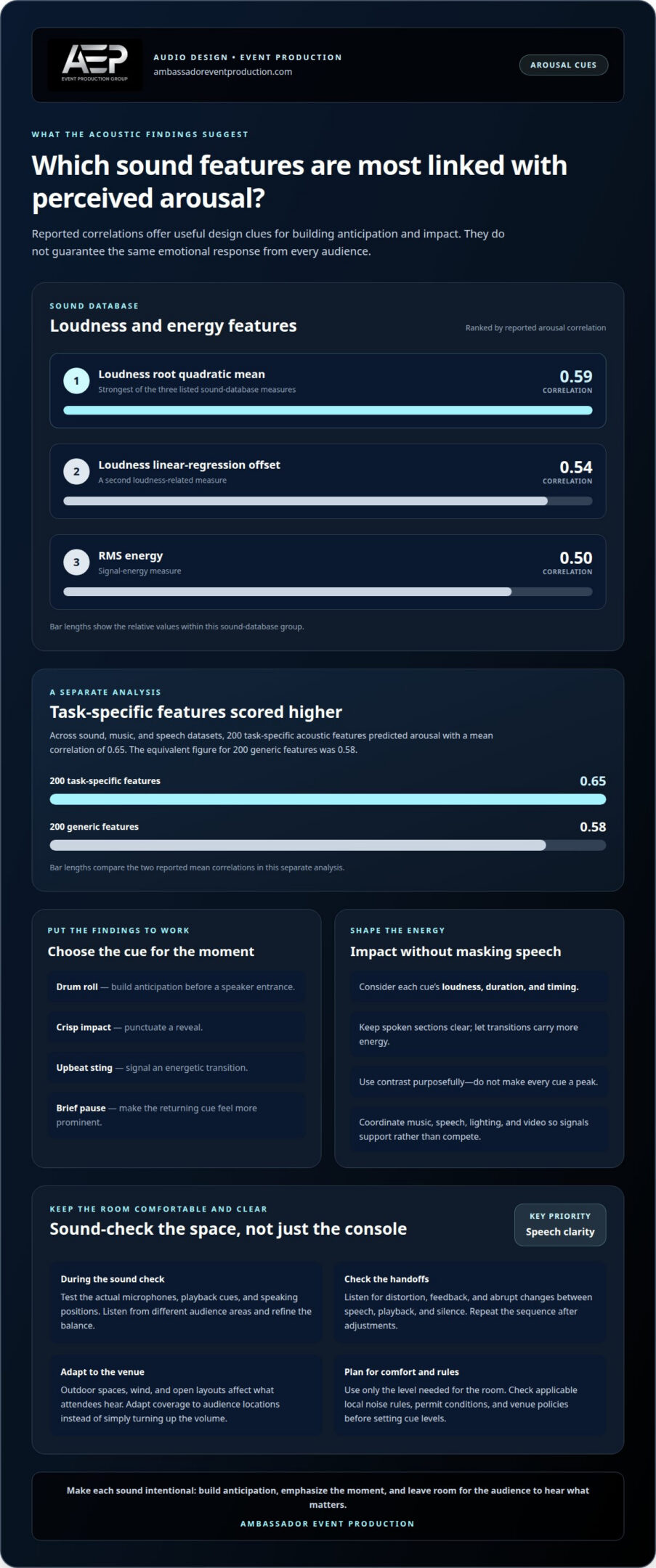
Some acoustic features are associated with higher perceived arousal. In one sound database, loudness root quadratic mean had an arousal correlation of 0.59. Loudness linear-regression offset reached 0.54, while RMS energy reached 0.50. These measures describe different aspects of loudness and signal energy. A separate analysis found that 200 task-specific acoustic features predicted arousal with a mean correlation of 0.65 across sound, music, and speech datasets. The equivalent figure for 200 generic features was 0.58. These findings offer design clues, not a guaranteed emotional response from every audience.
To use audio to build excitement at an event, match each cue to its purpose. A short drum roll before a speaker entrance can build anticipation; a crisp impact can punctuate a reveal. An upbeat musical sting can signal an energetic transition, while a brief pause can make the next cue feel more prominent. Consider loudness, duration, and timing, and keep cues clear of important speech.
Live event audio can shape emotion through music, speech, and effects, while lighting and video provide visual signals. For example, a rising musical cue can build anticipation as the lighting shifts and a screen reveals a product. Coordinating these elements gives the audience consistent signals, with each one supporting the moment rather than competing for attention.
For U.S. events, applicable sound limits can depend on local noise rules, permit conditions, and venue policies. Identify the requirements that apply to the specific event and location, then include them in the production plan before setting cue levels.
Loud audio can cause discomfort and put hearing at risk, particularly when listeners remain near strong sound for an extended period. Keep speech clear, use only the level needed for the room, and avoid making every cue a peak. Where practical, provide quieter areas and hearing protection for attendees.
Outdoor spaces disperse sound differently from enclosed rooms, and wind or open space can affect what attendees hear. Adapt coverage to audience locations and the event layout instead of simply turning up the volume. A small gathering may suit a focused setup, while a larger audience spread across an open area may need more even coverage. Using audio to build excitement at an event means shaping cues for the space as well as the moment.
Loudness and energy features
Loudness shapes how close, urgent, or forceful a sound feels. A gradual rise beneath a host’s introduction can build momentum; a sudden increase may startle listeners or obscure words. Use contrast purposefully: keep spoken sections clear, then let a musical transition carry more energy. A brief pause before a reveal can make the returning sound feel more impactful without simply raising the level.
During a sound check, test the actual microphones, playback cues, and speaking positions. Walk through the audience area while someone speaks and plays the opening, transition, and closing cues. Adjust levels so speech remains clear across the room, then listen for distortion, feedback, or abrupt changes between sources. Repeat the sequence after adjustments, since a balanced microphone level doesn’t guarantee balanced music.
- Test each microphone while the speaker moves through their expected position.
- Play music and effects at the levels planned for the event.
- Check transitions between speech, playback, and silence for sudden jumps.
- Listen from different audience areas and refine the balance.
These checks help the sounds enhance a program rather than compete with it. Audio-visual technical support can coordinate playback, microphones, and transitions as one system, especially when several sources share the event. For a tailored setup, explore audio-visual technical support.
Audience participation can add energy when it connects naturally to the moment. A host might invite attendees to repeat a short phrase, respond to a call-and-response, or cheer when a speaker reaches a reveal. Give a clear verbal cue, leave space for the response, and avoid playing music over the audience’s words. The response itself becomes part of the event’s sound.
For example, a host can ask, “Are we ready?” and pause for the crowd before a walk-on track begins. Make the invitation easy to understand from the back of the room, and ensure the microphone captures both the host and the audience. This makes participation audible without relying on louder playback alone.
How should event organizers plan audio cues and transitions?
Start with the run of show, then mark each moment that needs sound. A keynote entrance may need a short musical cue, while a panel handoff may need only a brief pause. Give every cue a clear purpose, such as welcoming a speaker, punctuating a reveal, or signaling a break. This keeps the sound connected to the program.
Build a cue sheet that the host, stage manager, and audio operator can follow together. Record each cue’s name, trigger, source, and next action. “Play walk-on music when the host introduces the keynote” is clearer than “play entrance track.” Include spoken cues and silence, too. A planned pause before a product reveal can help focus attention. For organizations aiming to strengthen their internal scripting, event marketing, and business communication skills, courses from College of Media and Publishing provide practical training for workplace teams.
- Mark each sound moment in the event schedule, including entrances, transitions, and closing remarks.
- Choose a distinct file name for each cue, such as “Panel walk-on” or “Break return.”
- Specify the trigger, such as a host’s final sentence or a presenter reaching the stage.
- Rehearse the cue with the person delivering the trigger, then adjust timing if it overlaps speech.
- Prepare a simple fallback, such as the host introducing the next segment without music.
Plan transitions to orient the audience as well as create energy. For example, lower the music before the host speaks, then bring it back after the announcement. If a video ends with a musical sting, coordinate the next speaker’s entrance so the sounds don’t collide. Clear handoffs help each segment feel intentional.
Before doors open, run the cue sequence in order with the presenters and playback sources. Confirm that the operator can identify each cue quickly and that the host knows how to signal it. A final rehearsal can reveal missing transitions, overly long music, and moments when speech needs priority. Keep the cue sheet available to the production team throughout the event.
How do venue size and acoustics affect event sound design?
A ballroom, theater, and outdoor plaza each shape sound differently. A wide room may make distant seats harder to hear, while a narrow room can create strong reflections from nearby walls. Start by mapping the audience area, stage, and speaking positions. Then plan coverage for where people will sit or stand, not just the center of the room. A presenter’s voice should remain clear at the back without overwhelming guests near the stage.
Surfaces matter, too. Hard floors, glass, and bare walls reflect sound, which can blur speech and make music feel less controlled. Curtains, upholstered seats, and other soft materials absorb some sound. During the sound check, test spoken words and the event’s actual playback cues from several audience positions, including reflective corners. Adjust speaker placement or levels to improve clarity. If a room’s long reverberation makes a sentence difficult to follow, adding volume alone may worsen the listening experience.
- In a reflective hall: Aim sound toward the audience rather than directly at hard walls.
- In a deep room: Check whether guests at the rear can follow speech and musical transitions.
- In a changing layout: Reassess coverage when chairs, partitions, or the stage move.
Outdoor spaces present different challenges. Without enclosing walls, sound can disperse, while wind and surrounding activity may affect what attendees hear. If guests are spread across several areas, consider their locations and speaker direction before setting levels. Keep announcements distinct from music, and test from the edges of the listening area. These checks help adapt the sound to the event’s actual footprint.
Lighting can reinforce the same spatial cues. A focused stage look can draw attention toward a speaker, while a shift in lighting can signal a transition. For event-specific lighting design and execution, coordinate the visual plan with the room layout and sound design.
Ambassador Event Production
Ambassador Event Production brings event sound, visuals, and lighting together to support the atmosphere you want to create. When an event needs coordinated cues, clear transitions, or technical support across several production elements, the team can shape an approach around the program and venue. Audio Production Services and Audio-Visual Technical Support support the sound plan, while lighting and video can reinforce key moments without competing for the audience’s attention.
Bring your event schedule, venue details, and the moments you want to emphasize to the conversation. These details help guide practical decisions about cues, transitions, and how production elements work together. Contact Ambassador Event Production to discuss your event’s audio and production needs.
Shape the Energy of Your Next Event
Give your event’s key moments a clear emotional direction before production begins. Decide where anticipation should build, when the audience should focus, and which transitions need a distinct sound. Those choices create a practical starting point for using audio to build excitement at an event while keeping the experience connected to the program and the people in the room.
Ambassador Event Production can bring that direction into the production plan through Audio Production Services, Audio-Visual Technical Support, and Video Production Services. To develop the sound and visual approach for an upcoming event, share the moments you want attendees to remember and the atmosphere you want to create.
Contact Ambassador Event Production to discuss your event’s production needs and take the next step with a clear plan.
Frequently Asked Questions
What are examples of sound effects?
Examples include a whoosh as a presentation slide reveals a headline, a chime before an award announcement, or a short applause effect to introduce a celebratory segment. A soft notification tone can mark a change on screen, while a cymbal swell can punctuate a stage entrance. Choose effects that suit the event and make the moment clearer, rather than adding sounds without a purpose.
How can audio build excitement at a live event?
Audio can guide the audience’s attention and make a program’s turning points feel distinct. At an awards event, a host might introduce a category over restrained music, pause for the winner’s name, then bring in a celebratory track as the recipient approaches the stage. The contrast separates the announcement from the entrance, while the host’s voice keeps the sequence clear and connected.
What types of music and sound effects create anticipation at events?
Repeating rhythmic patterns, gradually rising musical phrases, and restrained low-frequency pulses can create a sense that a moment is approaching. A brief reverse cymbal or ascending tone can lead into a screen reveal or announcement. For a more reflective program, a sparse instrumental phrase can hold attention without suggesting a high-energy mood. Match the cue’s character to the event and the moment it introduces.