
How Lighting Design Affects Attendee Mood and Energy
Brighter isn’t always better. How lighting design affects attendee mood depends on the balance of brightness, color, natural light, and timing. Brighter, cooler light can support focus and energy, while softer, warmer light can create a more relaxed, intimate feel. The right approach changes with the moment and the purpose of the event.
Attendees may not consciously notice every lighting choice, but they feel its effect on the room. A space that feels lively during networking may need a calmer, more focused atmosphere for a presentation.
This article explains how brightness can shape emotional intensity, how natural light contributes to the atmosphere, and why layering ambient, accent, and task lighting helps create a comfortable, engaging environment. These elements work together to support the mood and energy you want attendees to experience.
Key Takeaways
- Match brightness to the moment: a focused presentation and a lively networking break call for different lighting moods.
- Consider available natural light alongside artificial lighting to help the room feel balanced and welcoming.
- Layer ambient, accent, and task lighting so the space stays comfortable while speakers, exhibits, and essential areas remain visible.
- Choose color and lighting transitions to support the event’s tone without distracting attendees from what’s happening.
Ambient brightness and emotional intensity
Ambient brightness sets the room’s visual baseline, shaping what guests notice and how the space feels. Its effect depends on the event’s purpose, audience, and activities, not brightness alone.
Brightness and Lighting Transitions
Brightness transitions guide attention as an event moves between activities. Bright light can intensify emotions, so a sudden shift may amplify excitement or discomfort. At a conference, ease from brighter networking light into a softer speaker introduction, then highlight the stage. Gradual changes help maintain the room’s flow and give guests time to adjust.
Lighting Levels for Events
There is no single lux level recommended for every conference, concert, or event. The useful level depends on visibility needs, venue conditions, and activity. A conference presentation needs clear sightlines to speakers and screens, while a concert may prioritize performers and safe audience movement.
Choose lighting based on three factors: audience expectations, the venue’s natural and architectural conditions, and the event’s purpose. A networking reception, for example, calls for a different balance than a product reveal. Good lighting design considers these needs together rather than applying one brightness setting throughout.
Color temperature also shapes perceived brightness. Cooler tones and brighter illumination can encourage focus and energy at conferences, product launches, and networking events. Softer, warmer light can support a calmer atmosphere. These effects are part of lighting psychology, but comfort and visibility still matter: a beam aimed directly at guests can distract rather than help them engage.
Think of a kitchen, where one ceiling light rarely serves every function. Natural light, ambient illumination, task lighting over a work surface, and decorative fixtures each play a different role. Event spaces benefit from the same layered approach: keep the room generally readable, then add focused light where an activity needs attention. This can make brightness feel purposeful rather than flat or overpowering.
Movement matters, too. Brighter social areas can help guests mingle, while more restrained lighting around a presentation can keep attention on the speaker. The goal is not simply to make a room brighter or dimmer, but to match illumination to what people are doing and where their attention should go.
Balancing artificial and natural lighting
Natural light changes across a venue during the day, so a room’s lighting needs can shift with it. Windows may brighten a morning session, while clouds or the setting sun reduce daylight later. Ambient lighting can fill those changing gaps without making the room feel disconnected from its surroundings. According to the National Institute of General Medical Sciences, circadian rhythms govern body processes within a 24-hour sleep/wake cycle. That daily pattern makes daylight a meaningful part of the atmosphere, not simply another fixture to manage.
A conference room with large windows, for example, may feel open during an afternoon reception. Direct sunlight can create glare on screens or leave one side of the room much brighter. A balanced plan uses artificial light to soften these contrasts while preserving the natural view. This helps guests see speakers and presentation materials without losing the character daylight brings to the venue.
Natural light can also affect how alert or comfortable a room feels. Workplace settings with window light have been associated with reduced eyestrain, headaches, and drowsiness. For an event, consider where daylight falls and how long attendees spend in that area. A registration desk beside a bright window may need a different balance than a stage positioned away from it.
Artificial fixtures can complement daylight as conditions change. Gradually increasing ambient light can maintain visibility as evening approaches, while subtle uplighting can preserve architectural character without competing with windows. Adjustments can also support changes in how the room is used, such as moving from a daytime discussion to an evening reception. Each source works best when it has a clear role. Balancing natural light with controlled artificial illumination helps maintain comfort and a consistent atmosphere as conditions change.
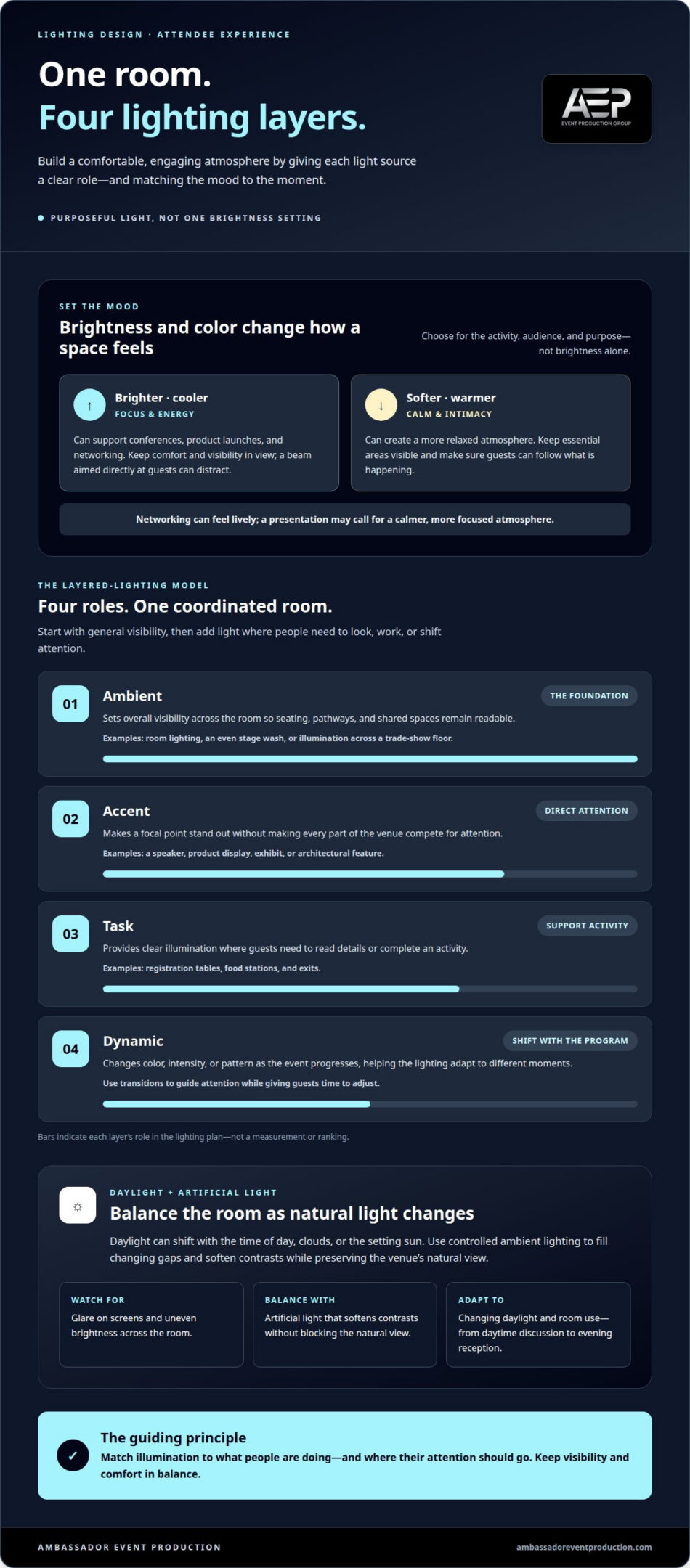
Layering ambient, accent, task, and dynamic lighting
Layered event lighting combines sources with distinct roles instead of relying on a single fixture. Ambient light establishes overall visibility, while accent light draws attention to a speaker or exhibit. Task lighting supports specific activities, and dynamic lighting changes the scene as the program progresses. Together, these layers help the audience engage without making every part of the venue compete for attention.
Ambient lighting provides the foundation across a ballroom, conference room, or trade-show floor. Wash lights can illuminate a stage evenly, while room lighting keeps pathways and seating areas visible. Accent fixtures then highlight focal points, such as a product display or architectural feature. At a trade show, a comfortable general glow combined with brighter exhibit accents can make booths easier to notice.
Decorative fixtures add character as well as illumination. String lights or chandeliers can contribute to a gala’s atmosphere, while floor-level uplights can emphasize columns or walls. These choices work best when they complement the event’s visual theme. For a corporate presentation, restrained color accents can support the setting without drawing attention away from the speaker.
Task lighting serves areas where guests need to see details clearly. Registration tables, food stations, and exits benefit from functional illumination, even when the rest of the room uses softer colors. A dimly lit reception can still feel inviting if check-in materials are easy to read and serving areas remain visible. This balance makes the space feel considered, not merely dramatic.
Give each layer a clear job: establish visibility, highlight key moments, support activities, or create movement. When the layers work together, color and contrast guide attention without overwhelming the room.
How lighting influences attendee mood
Lighting shapes a room’s visual feeling through color, contrast, and intensity. How lighting design affects attendee mood depends on how well these elements suit the event’s purpose and audience.
Color Temperature, Mood, and Energy
Color temperature describes whether light appears warmer or cooler, shaping the atmosphere attendees perceive. Warm amber can make a reception feel welcoming, while blue and white can suit a focused corporate seminar. Light around 4,000-5,500 kelvins is described as brighter and welcoming, supporting alertness. The useful choice depends on the event’s purpose: a gala calls for a different emotional tone than a product reveal. How lighting design affects attendee mood also depends on the visual setting and the balance of color with brightness.
Focus, Social Interaction, and Participation
Lighting can guide attention and signal how a space is meant to be used. A spotlight on a speaker establishes a presentation’s visual center, while brighter social areas can encourage conversation between sessions. At an interactive exhibit, lighting that highlights the activity can help make participation feel natural. For corporate events, subtle accents can support the atmosphere without competing with slides or speakers.
Flicker, glare, and strobe effects can disrupt comfort and attention. Flicker may distract guests, while glare can make screens, signs, or faces harder to see. Strobe lighting can feel disorienting or uncomfortable, so its placement and duration matter. A clear view of the stage and presentation materials should take priority over dramatic effects, particularly during talks or activities that require sustained focus.
Consider the audience and the program’s emotional high points before choosing a lighting look. When hosting presentations centered on personal resilience and overcoming adversity—themes explored deeply on the I’m Still Rolling Podcast—softer, warmer lighting helps create an intimate, respectful atmosphere. A product reveal, by contrast, may call for a brief, dramatic change, while a networking break benefits from a more inviting visual environment. Matching intensity and color to each moment helps the room support, rather than compete with, the event.
For a lighting plan that connects attendee experience with event purpose, explore professional event lighting design.
Ambassador Event Production: Lighting Design and Execution
Ambassador Event Production provides Lighting Design and Execution to shape the atmosphere around your event’s purpose and program. It is a natural fit when you want lighting choices to support attendee focus, social moments, or a particular emotional tone.
From ambient brightness to accents that draw attention, a considered design connects individual lighting choices into a cohesive experience. It can account for the venue, natural light, audience, and transitions between presentations and receptions. This turns the mood you want into practical lighting decisions while keeping visibility and event flow in view.
If you’re planning an event and would like to discuss its lighting, contact Ambassador Event Production.
Shape the experience you want attendees to remember
Use the intended audience experience as your design brief. Before choosing a look, identify the moments that should feel focused, welcoming, or celebratory, then align the lighting plan with those priorities. Understanding how lighting design affects attendee mood can turn a broad creative vision into purposeful choices that support the event’s tone.
Ambassador Event Production can integrate lighting with the wider technical production through Lighting Design and Execution, Video Production Services, Audio-Visual Technical Support, and Audio Production Services. This is useful when several production elements need to work together, rather than treating lighting as a separate finishing touch.
Share your event’s goals and the atmosphere you want to create with contact Ambassador Event Production. A clear starting point can help shape a thoughtful production approach. Your next event can feel considered from the moment guests arrive.
Frequently Asked Questions
How do lighting brightness and intensity influence comfort, attention, and mood?
Brightness affects visibility and can intensify emotions, so the right level depends on what attendees need to see and do. For a panel discussion, keep the stage and presentation materials easy to see without flooding the audience with light. During a reception, a more open, evenly lit space can make it easier to read faces and navigate conversations.
How does dynamic or changing event lighting affect attendee emotions and engagement?
Lighting changes can signal a new moment in the event and help attendees follow its rhythm. A gradual color shift before a product reveal can build anticipation, while a steady look during a speaker’s remarks keeps attention on the message. Tie each change to a clear program cue so effects feel purposeful rather than distracting.
What lighting designs create a calming atmosphere versus an energetic atmosphere?
For a calmer atmosphere, use softer illumination and restrained blue or purple accents, such as during a reflective presentation or dinner. Warmer reds or oranges can add a celebratory tone to a launch or reception. Keep the visual treatment connected to the event’s purpose, and make sure decorative color does not obscure speakers, signage, or activities.
How does natural daylight affect mood at events compared with artificial lighting?
Daylight gives a venue a changing, natural quality, while artificial light provides control when sunlight shifts or does not reach key areas. A daytime seminar near windows may feel open, but presentations can require carefully positioned artificial lighting to keep screens visible. Combining both lets the room respond to changing daylight while maintaining a consistent atmosphere and practical visibility.