
How to Find a Reliable Event Technology Partner for Your Next Event
What if the biggest risk to your event isn’t a piece of equipment, but the gaps between the systems and people responsible for it? A reliable event technology partner does more than provide audio, video, lighting, staging, and rigging. These elements need to work together, especially when a key presentation or live program is underway.
Before trusting a partner with a high-stakes event, look for more than broad promises. A coordinated technical approach, attention to how production needs connect, and a shared understanding of show-day responsibilities offer more useful signs of reliability.
This guide explains what event technology reliability depends on and how to assess it in practical terms. You’ll learn what information to share and which questions can reveal how a partner coordinates technical systems, prepares for live delivery, and supports your event team. Ambassador Event Production provides integrated technical production across video, audio, lighting, staging, and rigging. Founded in 1955, the family-owned business focuses on the technical work behind professional and corporate events. Here’s how connected support can help you plan with greater clarity.
Key Takeaways
- A reliable event technology partner coordinates technical execution and clarifies responsibilities, helping backstage complexity stay out of the audience experience.
- Program changes can affect several technical systems. Align cues, content, equipment, and crew responsibilities during preparation.
- Advanced equipment alone doesn’t demonstrate reliability. Assess how the technical elements are planned and coordinated for live delivery.
- Share the run of show, presentation formats, speaker needs, and venue information to support a more complete production plan.
- Integrated video, audio, lighting, staging, and rigging support can bring the technical parts of an event together behind the scenes.
Why a reliable event technology partner matters when the stakes are high
For attendees, a well-run event feels straightforward: they can hear the speaker, follow the visuals, and stay engaged with the program. Backstage, that experience depends on people and technical systems working in sync. A presentation change may affect what appears on screen, which audio source is live, and when lighting shifts. The audience may never see those decisions, but they notice the result.
A reliable event technology partner coordinates technical execution, prepares for the program’s needs, and makes clear who is responsible for each part of delivery. Reliability doesn’t mean promising that no issue can occur. It means preparing carefully, understanding how systems depend on one another, and coordinating a response when plans change.
What does reliability mean in live event technology?
Dependable preparation starts with understanding the event program and its technical requirements. Clear ownership matters too: the people responsible for audio, video, lighting, staging, and rigging need to understand their roles and how their work connects. Equipment selection is only one part of the picture. Communication and execution turn a technical plan into a live experience.
Picture a speaker finishing one presentation and handing the stage to the next. The next presentation needs to be ready to display, the correct microphone needs to be available, and any planned lighting change needs to fit the transition. When those dependencies are understood and coordinated, the handoff can feel natural to the audience instead of becoming a pause for backstage troubleshooting.
What is at risk when event technology falls short?
A sound interruption can make a speaker difficult to follow. A video issue can leave attendees without an image or information they need, while a lighting change that misses its cue can distract from the stage. Even a short disruption may break a speaker’s connection with the room and interrupt the program’s rhythm.
There’s an operational impact as well. If event staff have to stop welcoming guests, supporting speakers, or guiding attendees to resolve a technical issue, attention shifts away from the audience. Consistent technical coordination helps support the experience the client intends to deliver. That’s the goal of disciplined preparation, not a guarantee that nothing unexpected will happen.
Event technology is one part of the wider work of preparing and delivering an event. A broad overview of event management and technology helps place technical execution alongside other event responsibilities. For a live production, the practical questions are how those responsibilities connect: who communicates a change, who acts on it, and how the relevant systems and crew stay aligned. Making these connections clear gives the event team a steadier foundation for show delivery.
How integrated event technology supports a dependable live experience
Live production systems are connected by the program they serve. A revised keynote format, a moved lectern, or a new video segment can change what audio, video, lighting, staging, or rigging teams need to do. Treating each discipline as a separate task can leave gaps at handoffs, even when each team is focused on its own work.
Coordination reduces avoidable handoff gaps by giving technical teams a shared understanding of the plan, their responsibilities, and how one change affects the rest of the production. Integrated delivery means aligning the services an event needs, not assuming every event requires every technical discipline. The plan should fit the program, the space, and the intended audience experience.
How audio, video, and lighting depend on one another
Consider a keynote with a live speaker, presentation slides, and a planned lighting cue. The audience needs to hear the speaker clearly, see the content on screen, and keep its attention on the stage. If the presentation adds a video, the team may need to coordinate playback with the speaker’s microphone and the lighting cue. Each element should support the same moment in the program.
A layout change can also affect where the speaker stands, which screens are visible, and how the room is lit. Sharing updates across departments helps the crew adjust the relevant cues and responsibilities together, rather than discovering a mismatch during the presentation. The process doesn’t require every team to manage every detail. It does require a clear route for communicating changes to the people whose work they affect.
Where staging and rigging fit into technical reliability
Stage design shapes the working environment for speakers, performers, and technical equipment. The layout can influence sightlines and where video or lighting elements need to be placed. Rigging decisions are part of that coordination: changes to the plan or venue conditions may affect how technical teams position and organize production elements. Keeping the relevant teams aligned helps them respond to revisions with the whole setup in mind.
For a deeper look at how stage decisions connect to technical requirements, the custom stage design technical guide explores the considerations involved. Discussing layout alongside audio, video, and lighting needs can bring practical dependencies into view before the event is live.
With integrated technical production, the event team can plan cues, content, equipment placement, and crew responsibilities as connected parts of the experience. Ambassador Event Production brings video, audio, lighting, staging, and rigging together for professional and corporate events. If you’re shaping a production plan, explore integrated technical production support to coordinate the disciplines your event calls for.
Reliable event technology partner: myths and evaluation criteria
Partner claims can sound similar, so look beyond equipment lists and broad assurances. A reliable event technology partner should explain how its technical approach fits your program and how responsibilities connect from preparation through show delivery. The practical test is whether the plan makes coordination clear, not whether it promises a flawless event.
Myth: reliable technology is simply the newest equipment
Myth: The most advanced equipment automatically makes a production dependable. Reality: Equipment needs to suit the program, venue conditions, audience, and other systems in use. A gear list describes what might be available, but not how the team will use it together.
Another common assumption is that one main contact removes the need for clear technical roles. A single point of communication can be helpful, but it isn’t enough on its own. If a presenter changes a video file or the stage layout shifts, the relevant audio, video, lighting, staging, or rigging responsibilities still need to be understood and coordinated.
Equipment capability is what a production can use; reliable technical execution is how people prepare and coordinate those capabilities for the event.
- Myth: One contact means every handoff is covered. Reality: The team should make technical ownership and communication paths clear.
- Myth: A gear list proves the plan is ready. Reality: The partner should explain how equipment supports the program and works with other production elements.
- Myth: A detailed plan prevents every issue. Reality: Preparation supports a considered response, but no plan can promise that nothing will change.
What to look for in a partner’s technical approach
Use these practical criteria to assess whether a proposed approach fits your event:
- Scope alignment: The proposed technical work reflects the program’s actual requirements and defines what each party is responsible for.
- Communication: Updates, decisions, and changes have a clear route to the people affected. For example, if a speaker’s presentation changes, the team knows how that update reaches video and any other relevant departments.
- Integration: The partner considers how video, audio, lighting, staging, and rigging relate, rather than treating each as an isolated task. Integrated capabilities can simplify coordination across these disciplines.
- Preparation: The plan accounts for program cues, content, venue information, and known changes, so teams can work from shared expectations.
- Show-day technical support: The people delivering the production understand their roles in carrying out the plan and communicating adjustments.
These criteria help distinguish a polished proposal from a workable technical approach. Ambassador Event Production brings video, audio, lighting, staging, and rigging together for professional and corporate events. The integrated technical event production guide offers further context on coordinating production disciplines. Use the criteria above to shape a practical conversation about technical scope and delivery, or explore integrated production support.
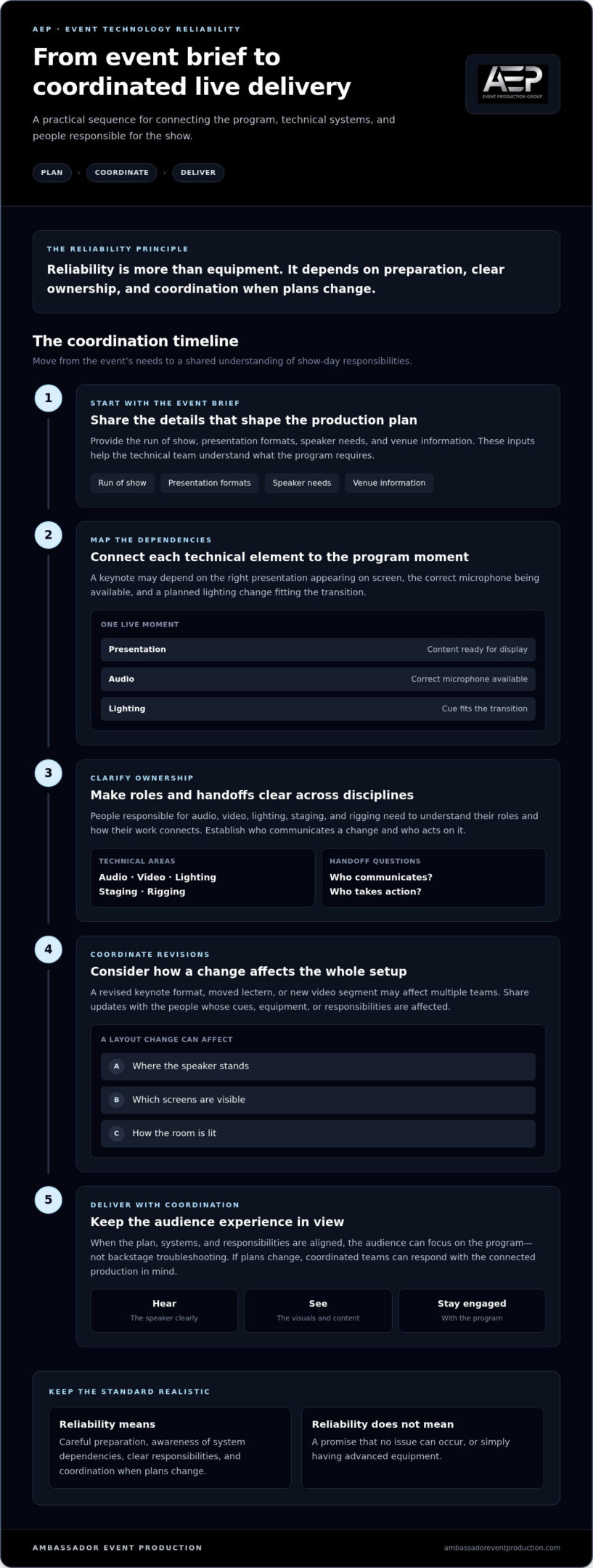
A practical checklist for preparing reliable event technology
Good technical preparation turns event details into a shared working plan. A reliable event technology partner can help align production with the program, and organized information from your team makes it easier to identify dependencies and agree on responsibilities. Use this sequence to move from event goals to show-day coordination.
Before production begins: clarify the event’s technical needs
Start with what attendees need to see and hear, then gather the details that shape delivery. Include the program flow, presentation content and formats, speaker requirements, venue information, and planned changes. Accurate stage and room details help technical teams understand how the program will work in the space and where coordination needs attention.
- Set the audience and event format. Note whether attendees will be in one room or participating in more than one way, and describe the experience the technical production needs to support.
- Map the program. Share the run of show, including speaker entrances, presentations, videos, transitions, and other moments that depend on a technical cue.
- Organize content and speaker needs. Gather presentation files and formats, identify who will provide or update them, and note speaker requirements such as microphone preferences or stage arrangements.
- Collect venue and stage information. Provide available room layouts, stage plans, and relevant venue details. If a layout or program element changes, communicate it early so the production plan and responsibilities can be reviewed.
- Map decisions and handoffs. Identify who approves content changes, who passes updates to the technical team, and how show-day messages reach the people responsible for acting on them.
Before showtime: align people, cues, and contingencies
Before the event begins, review the cue sequence against the current program, confirm playback needs and content handoffs, and clarify how changes will be communicated. Agree on responses to foreseeable adjustments, such as a delayed speaker or revised presentation. Contingency planning creates a shared response, not a promise that operation will be uninterrupted.
- Review the sequence: Walk through key cues and transitions in program order, noting who initiates each one and who needs to be ready.
- Confirm communication: Establish who can relay a change and how relevant technical team members will receive the update.
- Agree on adjustments: Discuss likely changes and the next steps the team will take, so decisions don’t have to start from scratch during the program.
Clear technical direction helps connect the run of show with the people carrying it out. The live event technical direction guide explores that role in production coordination.
Put these steps into practice with a technical team that can coordinate the production disciplines your event needs. Plan your event’s technical production with Ambassador Event Production.
How Ambassador Event Production works as a reliable technical partner
Technical production works best when it supports the event program without competing for attention. Ambassador Event Production is a family-owned and operated business founded in 1955, focused on the behind-the-scenes work that helps professional and corporate events take shape. Our role is technical execution: working with your event team to align production needs with the experience you want attendees to have.
One technical team across interconnected production needs
Ambassador provides video production, audio-visual technical support, audio production, lighting design and execution, staging, and rigging. This breadth supports an integrated approach: the technical disciplines involved can be considered in relation to one another, rather than as unrelated parts of a production.
For example, a program with presentations, spoken remarks, and changes in stage lighting may call for coordination among video, audio, and lighting. If the stage arrangement also affects equipment placement or sightlines, staging and rigging become part of the technical conversation. The specific mix depends on the event. Integrated production doesn’t mean every event needs every service; it means aligning the disciplines the program calls for.
That connected perspective can make coordination more straightforward for the event team. Instead of considering each technical element in isolation, you can discuss how production supports the program’s flow and where technical needs intersect. A reliable event technology partner brings that production-focused perspective while keeping your team informed about the work behind the scenes.
A steady partnership from technical preparation through execution
Experience matters, as does the way a technical partner works with the people responsible for the event. Ambassador’s family-owned history reflects a long-standing focus on service and collaboration. The technical team supports your goals and program; it doesn’t replace your event team or take over event planning. That distinction keeps responsibilities clear while connecting technical production to the wider event effort.
As the program and production requirements come together, collaboration helps keep technical work connected to the event’s priorities. Video, audio, lighting, staging, and rigging can be considered as parts of a coordinated production, with the scope shaped around what the event needs. The aim is a thoughtful, practical partnership, not a promise that every event will unfold without change.
If you’re preparing a professional or corporate event, bring your program goals and technical requirements into a conversation with a team focused on production. Discuss your event’s technical production needs with Ambassador Event Production, and explore how coordinated video, audio, lighting, staging, and rigging can support your event team.
Turn your technical priorities into a confident next step
Your next move can be simple: bring the program, key presentation moments, and technical priorities into one conversation. A clear starting brief helps your production team understand what matters most, where flexibility is needed, and which decisions should be settled together. It also gives you a practical way to move from evaluating a reliable event technology partner to building a shared approach for your event.
As you prepare, think beyond what needs to happen onstage. Consider what you want attendees to experience—from interactive touchpoints like Bestever.pics for guest photo sharing to on-screen visuals—which transitions deserve special attention, and how your event team wants updates handled. These priorities can guide a focused discussion and help shape a technical plan around your event, rather than a generic list of equipment or services.
Start a conversation about your event’s technical production with Ambassador Event Production. Bring your program and priorities to the discussion to build a shared understanding of the technical work and help your event team stay focused on the experience you’re creating.
Frequently Asked Questions
What does a reliable event technology partner do?
A reliable event technology partner connects technical requirements to the event program and helps the teams responsible carry them out. For example, if a keynote speaker adds a short video, the team can identify who provides the file, who prepares it for playback, and how the change fits the speaker’s stage time. That practical coordination helps the client’s event team focus on attendees and program priorities.
How do I know if an event technology partner is reliable?
Look for specific, relevant explanations rather than relying on confidence or a long equipment inventory. Share a real event detail, such as a speaker presenting from a laptop while another person manages slides, and listen for how the partner would clarify roles and communication. You should be able to understand who makes technical decisions, how updates reach the production team, and how the proposed approach fits your event.
Can one event technology partner handle audio, video, lighting, and staging?
Yes. Ambassador Event Production provides coordinated technical support across those disciplines. The scope should reflect the event, not a fixed package: a panel discussion may call for different support than a presentation with video content and stage changes. For example, if a stage layout shifts, the team can consider whether the change affects screen placement or lighting. The right scope fits the program’s needs.
What should an event technology RFP include?
Include enough detail for a production team to respond to the event you’re actually delivering. Along with the format, venue, schedule, and content needs, identify who supplies presentation files, who approves last-minute edits, and how speakers will share materials. Ask respondents to describe how they would coordinate the requested technical work and communicate changes. This makes it easier to compare the proposed approach, not just equipment lists.
Why is integrated event production important?
Integration helps technical teams see how their work connects to the program. Imagine a panel where the moderator introduces a video, then invites a guest onto the stage. Audio, playback, and lighting cues may all need to fit that transition. Considering the sequence together can clarify dependencies before showtime. It won’t remove every possible complication, but it can help teams avoid preventable confusion about who acts next.
What happens if event requirements change close to showtime?
Share the update through the agreed communication channel and identify what has changed, such as a revised slide deck, speaker order, or stage arrangement. The production team can then assess which technical tasks are affected and communicate next steps to the relevant people. For instance, a revised speaker order may call for cue adjustments. Changes should be addressed realistically, without promising they carry no risk.
Is event technology the same as event planning?
No. Event technology and production cover the technical work that supports the program, while event planning addresses the broader organization of the event. The teams may need to coordinate: a planner might revise the agenda, and the production team may need the updated schedule to adjust cues. Clear ownership helps each team contribute effectively. Ambassador Event Production focuses on technical execution, including video, audio, lighting, staging, and rigging.