
Seamless Transitions Between Event Speakers: Introductions and Handoffs
A speaker handoff can keep an event moving or leave the room waiting for what comes next. Seamless transitions between event speakers rely on clear introductions, a deliberate transfer of control, and a bridge connecting one contribution to the next. In practice, event flow is how smoothly the audience moves between speakers and ideas.
Even a strong lineup can lose momentum when speakers are unsure who takes the stage next, an introduction runs long, or the podium sits empty. A little preparation helps the audience stay focused and gives each speaker a confident start.
Learn how to introduce the next speaker, hand over the microphone and stage, and avoid awkward gaps. You’ll also find ways to build short bridges between ideas, rehearse handoffs, and keep virtual or hybrid transitions clear.
Key Takeaways
- Build introductions around each speaker’s topic and audience value, and confirm pronunciation and preferences before the event.
- Make the handoff clear with concise remarks, a deliberate pause, and an obvious cue for who takes control next.
- Keep the podium occupied until the incoming speaker arrives, and rehearse the stage movement to reduce awkward gaps.
- Use a brief link between speakers’ ideas to give the audience context and a sense of what comes next.
1. Introducing the next speaker
Start with why the audience needs to hear this speaker, not a list of credentials. Before the event, gather a brief biography and the talk’s title. Ask for the central idea and the outcome the speaker wants, then confirm name pronunciation, preferred introduction, and tone. These steps keep the introduction accurate and relevant.
Review the speaker’s background, achievements, subject, and goals. Choose one detail that explains why this person is speaking now. For example, connect a leadership speaker’s experience to a session about team decision-making. The difference between reading a biography and introducing a speaker is purpose: a biography lists background, while an introduction prepares the audience to listen.
Ask each speaker for one useful detail beyond their biography. A fun fact, brief personal story, or provocative question can make an engaging opening. For example, a speaker discussing workplace change might share a short lesson from a project that did not go as planned. Use the detail only if it suits the event’s tone and gives the audience a clear reason to pay attention.
Build the introduction in a simple order: establish the topic, explain the speaker’s connection, then state the name clearly. Keep it concise, and don’t add achievements the speaker hasn’t supplied or that research can’t support. A question can set up the talk: “What helps a team make sound decisions under pressure?” Follow with the speaker’s name and a direct welcome.
An emcee’s role may extend beyond introductions and transitions. Depending on the program, the emcee might lead an energizer, game, networking activity, or audience discussion. These moments should serve the event’s goals, not compete with the next speaker’s subject. With thoughtful research and a tailored opening, introductions become part of seamless transitions between event speakers and help the audience follow the program’s purpose.
The departing speaker can introduce the next speaker and invite the audience to applaud, then remain in place to keep the transition clear and seamless.
2. Handing control of the meeting to the next speaker
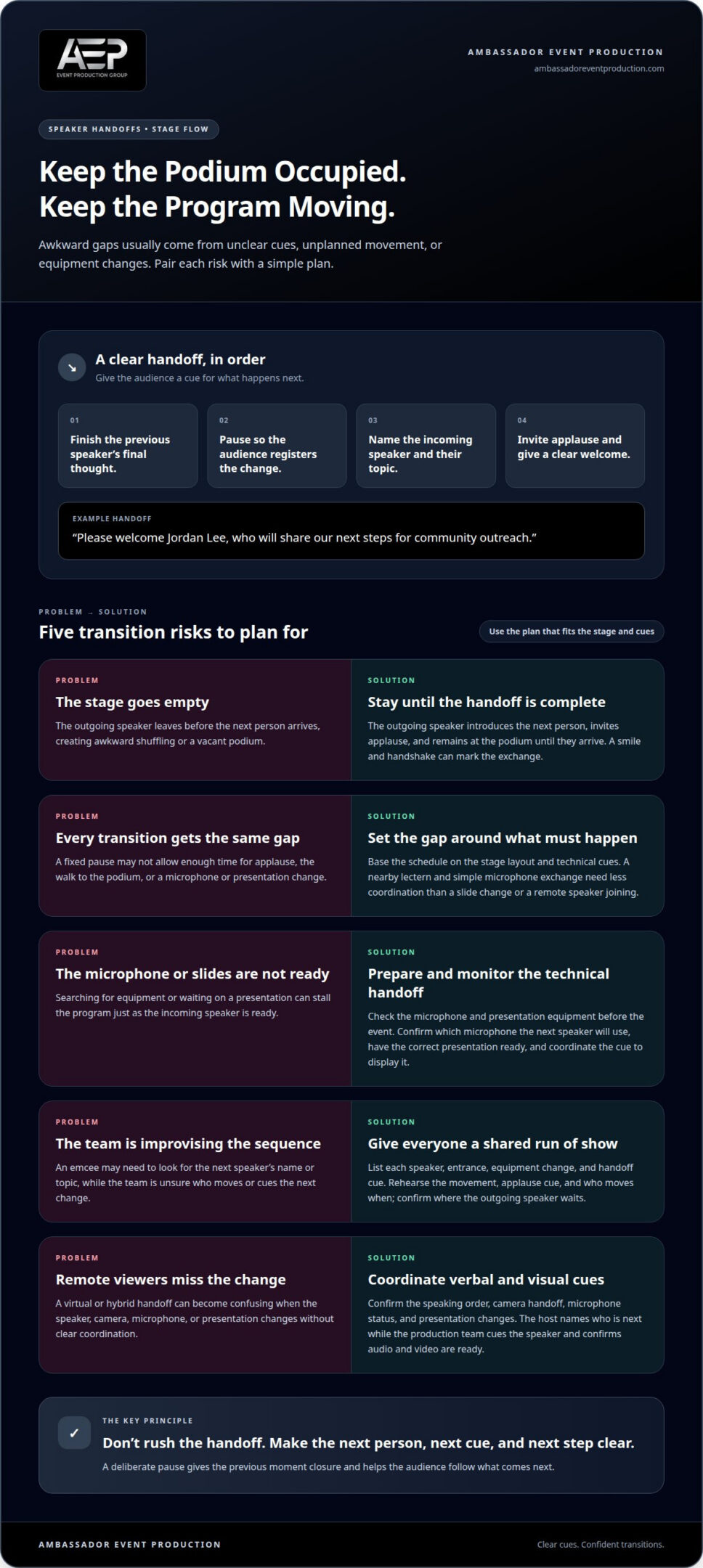
A handoff tells the audience who has control and what happens next. The outgoing speaker can close, name the incoming speaker, and invite applause. This gives the next person a clear cue to approach while the audience understands the change. Keep the words brief, then pause before giving the next instruction.
A useful handoff includes the incoming speaker’s name, topic, and a clear welcome. Add a practical cue, such as asking the audience to applaud as the speaker walks to the stage. For example: “Please welcome Jordan Lee, who will share our next steps for community outreach.” The name and topic provide context; the invitation signals that the next segment is beginning.
Deliver transitions clearly, confidently, and concisely. Vary volume, pitch, and intonation to emphasize the speaker’s name without making the introduction a performance. A brief pause between sentences lets the audience register the change. Finish the previous speaker’s final thought, pause, then introduce the next person. Don’t talk over applause or give directions while the incoming speaker is settling in.
For virtual and hybrid events, coordinate the speaking order, camera handoff, microphone status, and presentation changes. The host can tell the audience who is speaking next while the production team cues the incoming speaker and confirms their audio and video are ready. Clear verbal and visual signals help remote viewers follow the same handoff as the in-room audience.
Stage managers can prepare speakers by confirming their order, entrance point, microphone plan, and handoff cue during rehearsal. They can walk through who moves when, where the outgoing speaker waits, and how slides or remote feeds change. For events with multiple live cues, a shared transition plan helps connect speaker movement with technical timing. See how coordinated event cues can support a clear handoff.
An emcee’s measured delivery makes transitions easier to follow. Varying volume, pitch, and intonation adds emphasis and variety, while pauses between sentences and speakers give each moment closure and build anticipation for what follows.
In virtual and hybrid events, clear transitions also help prevent confusion during technical setup and speaker handoffs. A deliberate pause and clear cue help the audience follow the change as the next speaker and production team take over.
3. Avoiding awkward pauses and empty podiums
Plan each handoff before the event instead of improvising during a speech. The outgoing speaker should introduce the next person, invite applause, and remain at the podium until they arrive. A smile and handshake can mark the exchange before the first speaker leaves. Patience matters: moving too soon can cause awkward shuffling or leave the stage empty.
How much time should you allow between speakers? Leave enough time for applause, the incoming speaker’s walk to the podium, and any microphone or presentation change. Base the schedule on the stage layout and technical cues rather than using the same gap for every handoff. A nearby lectern and simple microphone exchange need less coordination than a slide change or a remote speaker joining.
AV teams can prevent delays by checking the microphone and presentation equipment before the event, then monitoring them as the program runs. They should know which microphone the next speaker will use, have the correct presentation ready, and coordinate the cue to display it. For example, a stage manager can signal the operator as the current speaker gives their closing line, so the next slide is ready when the incoming speaker begins.
Common mistakes include leaving the podium before the next speaker arrives, searching for a microphone, and changing slides without a clear cue. An improvised introduction can also stall the program while the emcee looks for the next speaker’s name or topic. A run of show listing each speaker, entrance, equipment change, and handoff cue gives the team a shared reference.
Rehearse speaker movement with the organizers whenever possible. Practice the applause cue, the incoming speaker’s approach, and the outgoing speaker’s exit. Record the emcee’s transition and review its pace, tone, and pauses. Prepare a short contingency script for a delayed speaker or technical issue, too. If plans change, the emcee can keep the audience informed while the team resets the microphone or presentation.
4. Bridge transitions
Create seamless transitions between event speakers by linking one speaker’s main idea to the next speaker’s topic. Use a short summary, relevant question, or clear preview, then cue the incoming speaker. For example: “We’ve heard how teams identify risks. Next, Morgan Chen will explain how to respond.” The audience hears the connection and understands what comes next.
When topics or presentation styles differ, acknowledge the shift without forcing a connection. A practical talk on budgeting might lead into a personal story about leadership with a line such as, “We’ve considered the numbers; now let’s hear how a leader handled a difficult decision.” The bridge respects both speakers while helping the audience shift focus. A quote, compliment, or audience question can also work when it genuinely fits.
A bridge can be a word, phrase, or full sentence. During a presentation, a speaker might say, “That brings us to the next challenge,” while putting away a visual to signal a shift in ideas. An effective transition connects to the previous point, signals a new one, and previews what follows. Keep the language accurate, especially when summarizing someone else’s remarks.
A run-of-show template gives the emcee and production team a shared view of each handoff. For every speaker transition, record the preceding segment, outgoing speaker, bridge line, incoming speaker, entrance cue, and any slide or microphone change. Add the time allocation and the person responsible for each cue. For example, a row might pair the panel’s final takeaway with the moderator’s closing line and the next presenter’s opening visual.
Read each bridge aloud during rehearsal, then adjust wording that feels forced or too long. A joke or statistic should earn its place by clarifying the connection, not distracting from it. Connect the transition to the audience’s next action, such as listening for a practical demonstration or considering a question. Plan clear event speaker transitions with support for the cues that bring each moment together.
Ambassador Event Production
Ambassador Event Production provides technical support to help keep speaker handoffs clear and coordinated. When microphone changes, presentation cues, lighting, or audience visibility affect the flow, our production team can coordinate these elements as part of the program.
Video Production Services, Audio-Visual Technical Support, Audio Production Services, and Lighting Design and Execution support event production needs. These services help presenters remain audible and visible as the program moves between speakers, with technical cues supporting each transition.
If you’re preparing an event and need production support for speaker transitions, contact Ambassador Event Production to discuss your technical needs.
Make the Next Handoff Part of the Experience
Each speaker change is an opportunity to shape the audience’s experience. Treat the handoff as part of the program, not a pause between its main moments. A clear transition can hold attention, make the next topic feel purposeful, and connect the event’s overall message. That’s the value of seamless transitions between event speakers: the audience can focus on the ideas instead of wondering what happens next.
As you prepare your run of show, consider where production cues and speaker movement need to work together. A coordinated technical plan can support the experience from the first welcome through the final handoff. Ambassador Event Production can help align production needs with the flow you want on stage.
Contact Ambassador Event Production to discuss your event’s production needs. With thoughtful preparation, you can create a program that feels connected from one speaker to the next.
Frequently Asked Questions
What Is Event Flow, Really?
Event flow is the audience’s experience as a program moves through sessions, breaks, and changes in pace. For example, a keynote followed by a short reflection and a practical discussion gives attendees different ways to engage with the same subject. Organizers can shape that experience by considering the event’s intended emotional journey and allowing time for people to absorb ideas.
What should an emcee say when introducing the next speaker?
An emcee should use a brief, accurate line that gives the audience a reason to welcome the speaker. For a panel discussion, the emcee might say, “Our panel will now explore how those ideas apply across different teams. Please welcome moderator Alex Morgan.” Adapt the wording to the program, use the speaker’s preferred name, and avoid claims or jokes that could distract from the subject.