
Staging and Rigging for Live Events: A Practical Production Checklist
What if the stage that looks right in a design can’t be supported by the venue as planned? Staging and rigging for live events requires more than an equipment list. Venue rules, suspended loads, and technical responsibilities all affect what can be built, and those decisions also shape audio, lighting, and video.
If you’re unsure what to confirm before the event build, or how to tell whether a provider can coordinate across production teams, start with the information everyone needs to share and the responsibilities each person owns.
This checklist covers decisions to make early, venue details and load information to gather, and questions to ask a staging and rigging provider. It also shows how staging, rigging, audio, lighting, and video plans fit together, so you can assess a technical partner by how they support the wider production, not just by the equipment they list.
Key Takeaways
- Staging and rigging serve different purposes but shape one connected production environment.
- Use a clear planning sequence to connect event needs, venue information, design decisions, plan reviews, and execution responsibilities.
- Compare providers by scope, coordination, communication, and accountability, not equipment lists alone.
- Organize pre-event checks by phase so approvals, documents, schedule changes, and communication paths have clear owners.
- Align staging and rigging with audio, video, and lighting teams early to support a coordinated technical production.
Staging and Rigging for Live Events: What the Work Includes
The stage must work reliably for performers and presenters, while production elements are positioned and supported appropriately for the venue. Staging and rigging for live events bring together connected but distinct needs. Staging creates the audience-facing platform. Rigging supports or suspends production elements overhead or elsewhere in the space. The design and technical requirements depend on the event, venue, equipment, and plans reviewed for that production.
How staging and rigging serve different production needs
Stage planning considers the platform’s size and layout, how presenters or performers access it, and whether the audience can see and hear the action. A keynote presentation, for example, may need a different arrangement from a program with several speakers moving across the stage. Rigging planning addresses how production elements are supported or suspended. For general background on lifting and moving loads, see Rigging (material handling). Event-specific rigging decisions still need to be assessed by qualified professionals and reviewed against venue requirements.
These choices affect one another. Stage position can shape where lighting needs to be placed. Screens and other video elements can affect sightlines and available overhead space. Audio placement needs to suit the room and program. Coordinating these decisions helps prevent each technical element from being planned in isolation.
Which event details shape the technical scope?
Start with the audience, program format, and production design, then match those needs to the venue’s information. Gather the documents and constraints that can inform a workable plan:
- Venue plans and technical specifications: Share available documentation and confirm which details the venue requires.
- Access restrictions: Ask about routes, spaces, and timing limits for bringing equipment into the event area.
- Program and design needs: Note who will use the stage and how lighting, audio, and video should support the experience.
Requirements and approvals can vary by venue and production. Confirm them with the venue and technical production team rather than relying on assumptions or a previous event’s setup. Structural and load decisions belong with qualified professionals who can review actual conditions and approved plans. An equipment list or general sketch is not a substitute for that assessment.
Technical production support is distinct from event planning, catering, or equipment-only hire. Ambassador Event Production provides staging and rigging alongside video, audio, and lighting capabilities, with a focus on technical execution. That connected scope can help teams consider how the stage and supported elements fit with the rest of the production.
How Live-Event Rigging Planning Connects Design, Venue, and Safety
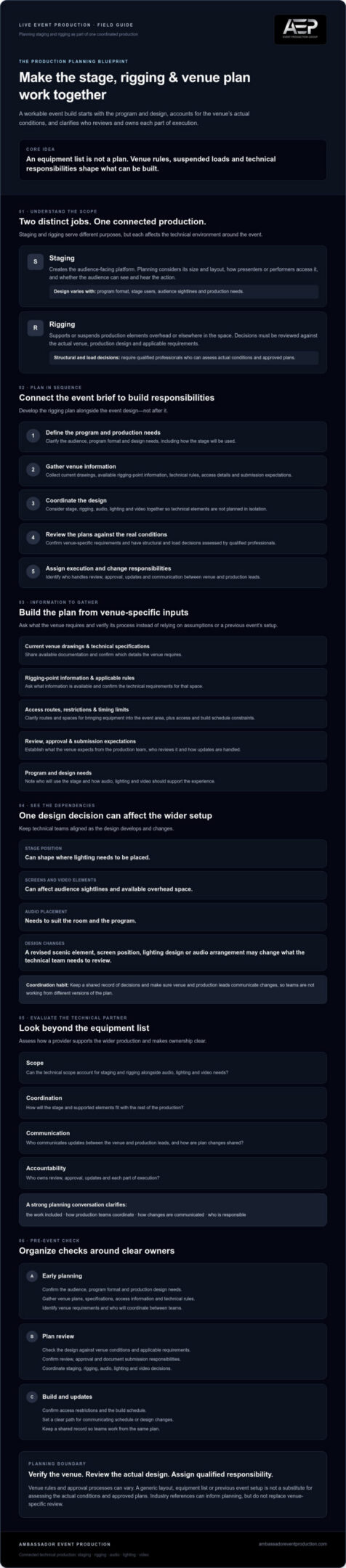
A dependable rigging plan develops alongside the event design, not after it. For staging and rigging for live events, work through a clear sequence: define program and production needs, gather venue information, coordinate the design, review the plans, and confirm who is responsible for each part of execution. This helps the team identify constraints early, while there’s still time to consider practical alternatives.
A rigging plan must reflect the venue and the actual production design, not assumptions or a generic layout. Structural and load decisions require qualified professionals who can assess the specific conditions and plans. Venue review matters too: rules, approval processes, and required documents can vary from one space to another. ESTA’s International Code of Practice for Entertainment Rigging is a useful industry reference, but it doesn’t replace checking the requirements that apply to your venue and event.
What information should the venue and production team exchange?
Ask the venue for current drawings, available rigging-point information, access details, and applicable technical rules. Confirm what information the venue expects from the production team, and who handles review, approval, and updates. Treat each venue-specific requirement as something to verify rather than assuming the same process or deadline applies everywhere.
Clarify access restrictions, overhead limitations, submission expectations, and the build schedule early. Identify who will communicate changes between the venue and production leads. A shared record of decisions helps prevent teams from working from different versions of the plan.
How do design changes affect rigging coordination?
A revised scenic element, screen position, lighting design, or audio arrangement can change what the technical team needs to review. Even if the stage footprint stays the same, equipment placement may affect coordination overhead or around the stage. Don’t assume an approved plan covers later design revisions.
Use a simple change process:
- Record the revision: Identify what changed and which drawing or document it affects.
- Share it promptly: Send the update to the venue contact and every responsible production lead.
- Confirm review: Have qualified professionals assess any technical implications and confirm whether further venue approval is needed.
Keep installation methods and load assessments in the hands of qualified personnel. When staging, rigging, audio, video, and lighting need to work together, a scoped discussion with a technical production partner can help clarify what information to align before plans are finalized.
How to Evaluate Staging and Rigging Providers for a Live Event
Choosing a staging and rigging provider involves more than checking available equipment. You need to understand how the provider will handle the technical scope, coordinate with the venue and other production teams, and clarify who owns each responsibility. Use the comparison below to guide a practical discussion.
| Evaluation area | What to ask | What to look for |
|---|---|---|
| Scope | Which staging and rigging responsibilities are included? | A clear description of the work and any items that need separate coordination. |
| Venue coordination | How will venue information and review requirements be gathered? | A defined process for confirming venue-specific details and communicating with the venue. |
| Design integration | How will the stage layout align with the production design? | Discussion of presenter needs, sightlines, and how lighting, audio, and video fit into the plan. |
| Communications | Who shares updates when plans change? | Named communication paths between the venue and relevant production leads. |
| Execution responsibilities | Who reviews technical details and confirms each task? | Clear ownership, with technical decisions assigned to qualified professionals. |
An equipment inventory can show what a provider has access to, but it won’t explain how the work will be coordinated. A list alone won’t tell you how venue requirements are reviewed, how design revisions are shared, or who communicates changes to the crew. Ask providers to talk through their process using your event brief and venue information. For a broader look at how production teams can work together, see this guide to integrated technical event production.
Questions to ask before appointing a rigging partner
Ask how the team gathers venue information and coordinates technical reviews. Clarify who communicates plan changes, confirms responsibilities during production, and ensures staging, rigging, audio, video, and lighting leads receive relevant updates. A useful answer should explain the process without making unsupported claims about credentials or approvals.
Why integrated technical capability matters
Stage design and rigging decisions can affect where lighting, audio, and video elements are placed, so discuss those needs together. If the stage layout is still taking shape, explore this guide to custom stage design as part of your evaluation. A coordinated conversation can make dependencies visible and help teams review changes against the shared plan.
Safety belongs in the wider production conversation, not just in a provider’s equipment list. The Event Safety Alliance offers resources on event safety that can help frame questions about planning and coordination. For technical work, confirm the applicable venue process and direct structural or load decisions to qualified professionals.
A Practical Staging and Rigging Checklist Before Event Day
A useful checklist shows what’s confirmed, what still needs review, and who owns the next decision. For staging and rigging for live events, keep venue approvals, current documents, schedule updates, and communication paths visible to the people responsible for the technical work.
Early coordination and documented responsibilities give the team a shared reference for decisions, approvals, and changes. Use these phases to organize the work, and label open questions clearly rather than treating assumptions as confirmed details.
Initial brief
- Confirm the event format, audience needs, stage requirements, and production design priorities.
- Identify technical stakeholders, including the venue contact and leads for staging, rigging, audio, video, and lighting.
- Record who owns each decision and where the team will document questions and updates.
Design and venue review
- Collect current venue drawings, technical information, access restrictions, and applicable review requirements.
- Establish who submits documents, who reviews them, and who communicates approval or requested revisions.
- List unresolved access, schedule, and design questions with a named owner and next step. Keep confirmed facts separate from items awaiting venue or qualified technical review.
Pre-build confirmation
- Share the latest reviewed plan and schedule with the responsible team members.
- Confirm role assignments, approval status, and how changes will reach each relevant production lead.
- Check that open items have been resolved or clearly assigned for follow-up before the build begins.
Event-day coordination
- Make sure the team is working from the current plan and knows how to raise concerns or communicate schedule changes.
- Document relevant revisions and share them with the people whose work may be affected.
- Leave technical inspection and installation decisions to qualified personnel, following applicable venue and other requirements.
A checklist is most useful when it reflects the actual event and venue. If a change affects the design or schedule, record what changed, who needs to review it, and how the decision will be communicated. This helps keep the team aligned without replacing professional technical judgment.
For information on how staging and rigging can fit with an event’s audio, video, and lighting requirements, see Ambassador Event Production’s technical production services.
Bring Staging and Rigging Together with Your Event Production Team
With venue details and a checklist in hand, bring the relevant technical stakeholders into one conversation. Define what the event needs to achieve, share what you know about the venue, and identify which decisions still need review. This gives the production team a clearer starting point for shaping the technical scope.
What to include in an initial production conversation
Share the event format, anticipated schedule, venue information, and objectives for the stage. Explain whether the stage will support presenters, performers, or both, and note known audio, video, and lighting requirements. Include current venue documents where available, and list details that haven’t yet been confirmed, such as access restrictions or approval steps.
Ask how staging and rigging will be considered alongside audio, video, and lighting. If lighting coordination is part of the discussion, this guide to intelligent event lighting offers another point of reference. The goal is to understand how the technical areas relate and who needs to review information as the design develops.
How to move from planning into coordinated execution
Before the build begins, agree on the scope, who communicates with the venue, which leads receive updates, and when plans will be reviewed. Decide how the team will document revisions and raise concerns. Confirm venue approvals and technical responsibilities with the relevant parties. Structural and load decisions should remain with qualified professionals working from the actual venue information and production plan.
Ambassador Event Production provides staging and rigging alongside video, audio, and lighting. The company focuses on technical production and doesn’t provide event planning, catering, or equipment-only dry hire. Its family-owned history dates to 1955, but project-specific questions about scope, coordination, and responsibilities remain essential.
Good preparation makes the first conversation more useful: define your objectives, gather venue details, align stakeholders, and bring forward both confirmed information and open questions. Review Ambassador Event Production’s technical production services to see how staging, rigging, and the wider technical scope may fit together for your event.
Move Forward with a Coordinated Production Plan
Strong staging and rigging for live events starts with clear objectives, current venue information, and a shared understanding of who reviews and communicates technical decisions. When staging, rigging, audio, video, and lighting are considered together, teams can spot dependencies while the plan is still taking shape.
Use the checklist to gather venue details, distinguish confirmed information from open questions, and clarify responsibilities before the build. Assess providers by their coordination process and scope, not equipment lists alone. Qualified professionals should review technical decisions against the specific venue and approved plans.
Ambassador Event Production is a family-owned and operated business with a history dating to 1955. Its technical production services include staging and rigging alongside video, audio, and lighting.
Thoughtful preparation and clear technical conversations can help your team move toward event day with a shared plan and a better understanding of the work ahead.
Frequently Asked Questions
What is staging and rigging for live events?
Staging and rigging for live events combines the audience-facing platform with the systems and work used to support or suspend production elements. Staging provides a place for presenters or performers and shapes access and sightlines. Rigging supports elements such as lighting or video equipment in the event space. The technical scope depends on the venue, design, equipment, and plans reviewed for that production.
How do you plan rigging for a live event?
Start by defining the event format and production needs, then gather current venue drawings, technical information, access restrictions, and review requirements. Coordinate design details with the relevant production leads and venue contact. Qualified professionals should assess structural and load questions using the actual venue and production information. Keep a record of reviews, approvals, responsibilities, and plan revisions so the team knows which information is current.
What should I ask a staging and rigging company?
Ask what its scope includes, how it gathers venue information, and how technical reviews and venue communications are handled. Clarify who will share plan changes, confirm responsibilities, and coordinate updates with audio, video, and lighting leads. You can also ask what relevant qualifications, documentation, and review processes apply to your project. Look for clear answers about coordination and accountability, not only an inventory of available equipment.
Does the venue need to approve event rigging plans?
Approval requirements depend on the venue and the specific production, so confirm the process directly with the venue rather than assuming it is the same everywhere. Ask what drawings or technical documents are required, who reviews submissions, and how revisions are handled. Share the venue’s requirements with the production team, and leave technical decisions to qualified professionals. Confirm approvals and open questions before the build begins.
Can staging, lighting, audio, and video be planned together?
Yes. Coordinating these areas helps the team consider how stage layout, sightlines, and production equipment placement relate to one another. For example, a screen position may affect stage composition, while lighting and audio needs also influence the technical plan. Bring the relevant leads into the design discussion early and share revisions consistently. This supports an integrated plan without assuming that one layout suits every venue or event.
When should I involve a staging and rigging provider?
Involve a provider while the event format and production design are still taking shape, before key layout decisions are treated as final. Share the anticipated schedule, venue information, stage objectives, and known technical needs. Early discussion can help identify details that need venue confirmation or qualified technical review. Bring the provider back into the conversation if the design, equipment needs, access information, or schedule changes.