
Technical Director in Corporate Events: Role and Duties
A technical director does more than oversee equipment: they connect technical teams and production decisions with the client’s goals. The role of a technical director in corporate events spans audio, video, lighting, staging, and other production elements, from planning through showtime. They also provide a key point of contact when a technical change affects the run of show.
It’s easy to assume this work is simply about setting up equipment, but the role also involves coordinating people, solving production challenges and explaining the practical impact of changes. This article breaks down a technical director’s responsibilities, clarifies how the role differs from a production manager, and explains how the director works with corporate clients. You’ll see how that coordination helps keep technical decisions connected to the event’s objectives and gives clients a clear partner for production discussions.
Key Takeaways
- A technical director coordinates the event’s AV, lighting, video and staging so production elements support the event’s goals.
- Technical responsibilities evolve from pre-event planning and coordination to on-site oversight and troubleshooting.
- A production manager typically focuses on broader production logistics, while the technical director leads technical decisions and explains their practical impact.
- A clear technical point of contact helps corporate clients understand production choices and manage changes as the event takes shape.
What Does a Technical Director Do in Event Production?
A technical director translates event goals into coordinated production requirements and guides their delivery. The role connects equipment choices, crew responsibilities, and event teams.
Production Planning and Equipment Coordination
Production planning establishes the technical setup, staffing, and equipment an event needs. Decisions about sound, video, lighting, and staging shape how the program works in the room. The technical director translates the event format into coordinated requirements and aligns crew responsibilities with those needs.
An event coordinator typically focuses on broader event logistics, while the technical director leads technical production decisions. For a product launch, for example, they can map presentation audio and screen needs to the program schedule. The U.S. Bureau of Labor Statistics projects employment in the Producers and Directors occupation to grow by 4.0% from 2025 to 2035.
Live Crew Leadership and Troubleshooting
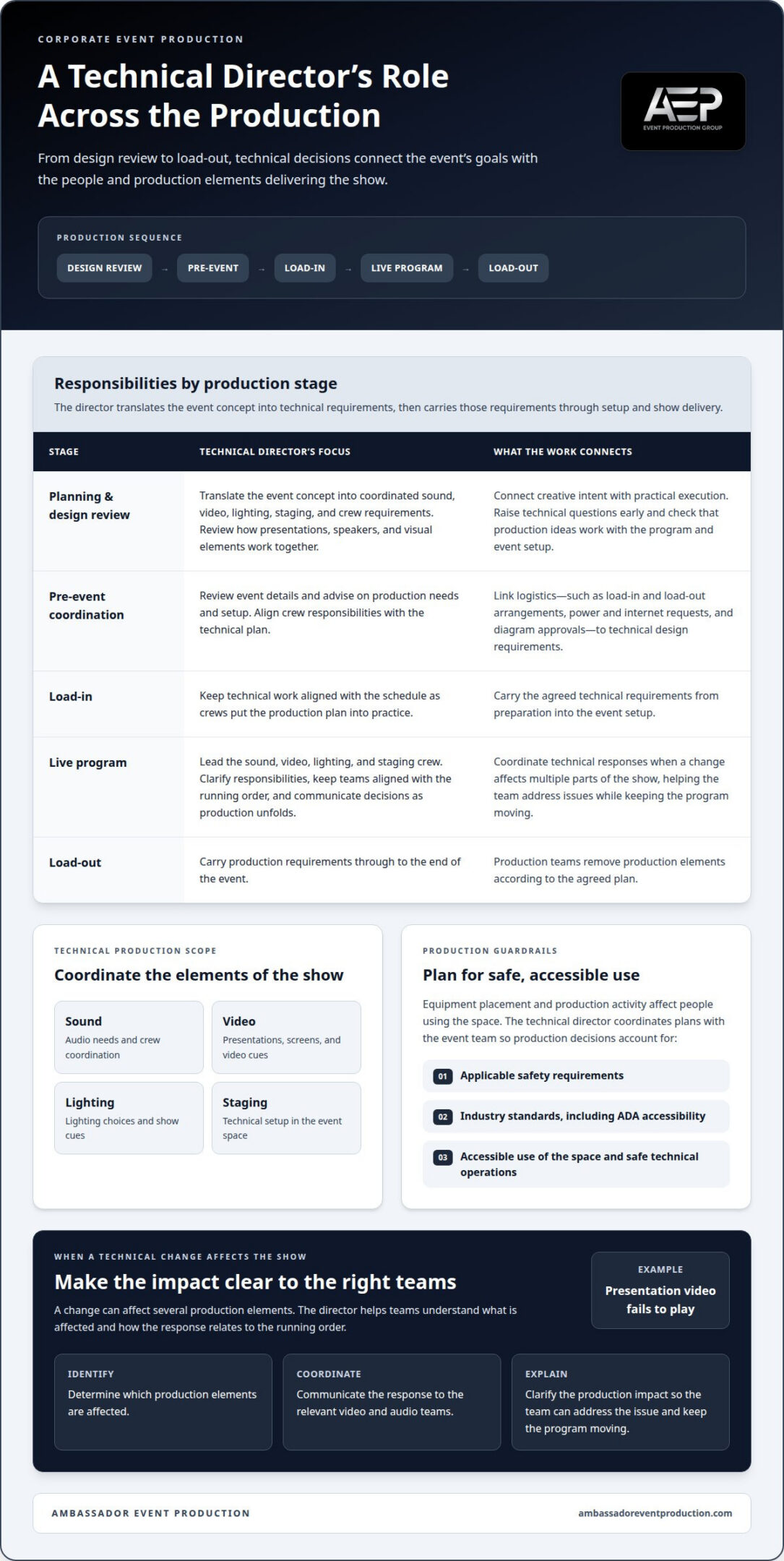
During a live event, the technical director leads the crew responsible for sound, video, lighting, and staging. Because one technical change can affect several parts of the show, the director clarifies responsibilities, keeps teams aligned with the running order, and communicates decisions as production unfolds.
If a presentation video fails to play, the technical director can coordinate the video and audio teams on a practical response. They identify the affected elements, communicate the change to the relevant crew, and help keep the program moving. Clear direction reduces confusion while the team addresses the production issue.
Vendor and Event Team Coordination
Coordination with vendors and event teams aligns technical requirements with the people delivering each part of the production. The schedule, venue arrangements, and technical setup all need to work together. The director communicates production needs to vendors, event producers, presenters, and the corporate team.
In a convention session, a presenter’s video, the room’s sound, and the event schedule come together at showtime. The director helps each team understand how its responsibilities connect and flags conflicts that could affect delivery. When a change affects the technical setup or timing, the director explains its production impact to the relevant teams.
Safety, Accessibility, and Compliance Requirements
Safety, accessibility, and compliance shape how technical production is set up and operated, because equipment placement and production activity affect people using the space. A technical director oversees applicable safety requirements and industry standards, including ADA accessibility.
What are the main safety, accessibility, and compliance requirements for event technical directors? Technical directors can help account for safety and accessibility when coordinating event production. In practice, the director coordinates technical plans with the event team so production decisions account for accessible use of the space and safe technical operations.
Technical director responsibilities throughout event planning and production
A technical director turns the event’s creative vision into a workable production plan. The role spans design review, load-in, show delivery, and load-out.
Technical Planning and Design Review
Technical planning and design review translate the event concept into coordinated requirements for sound, video, lighting, staging, and crew. Each production choice needs to serve the program and suit the event setup.
During the review, the technical director considers how presentations, speakers, and visual elements will work together. For a product launch, they can coordinate screen content and lighting cues with the announcement order. They also raise technical questions with the event team early, so answers can shape the production plan.
This review connects creative intent with practical execution. A dramatic lighting idea, for example, needs to work with speaker visibility and the presentation screen. The technical director helps teams understand these relationships before they become show-day changes.
Production Planning Across Event Stages
Production planning organizes technical work across pre-event preparation, load-in, the live program, and load-out. Timing and responsibilities at each stage affect what can happen next.
Before production begins, the technical director reviews event details and advises on production needs and setup. The event producer may coordinate logistics such as load-in and load-out, power and internet requests, and diagram approvals. The technical director links those arrangements to the technical design requirements.
During load-in, crews put the plan into practice and prepare the production for the event. The director keeps technical work aligned with the schedule and carries the production requirements through to the live program. Afterward, teams complete load-out by removing production elements according to the agreed plan.
For a conference with presentations and changing room setups, this planning helps coordinate the transition from preparation to show delivery. A clear sequence also helps the event team understand how a change in timing could affect production. If your event needs coordinated audio-visual technical support, include those requirements in the production discussion early.
Technical director versus production manager
A technical director leads technical decisions, while a production manager coordinates broader production operations. Knowing the difference helps corporate teams direct questions about technical choices, schedules, resources, and client expectations to the appropriate lead.
Budgets and Resource Management
Technical budget and resource management involves estimating the labor and production resources required by the technical plan. Changes to equipment or scope can affect both budget and schedule.
The technical director prepares labor and production cost estimates to inform show offers and budgets. For example, adding a presentation screen may change crew needs and setup time. The director can explain these effects before the team commits, helping the client weigh the technical benefit against the practical impact.
This work also helps teams prioritize resources. If a corporate program adds a presentation element, the director can outline the additional technical needs and timing implications. The production manager can then coordinate those details with the wider production plan.
Communication and Team Management
Communication and team management keep technical leads, production staff, and the corporate team aligned on decisions. A change can affect several aspects of a show, not just one technical detail.
At a planning meeting, the technical director can explain how a requested change affects setup, crew coordination, and show timing. The production manager can explain how it fits the broader schedule and other event responsibilities.
Clear ownership prevents crossed messages. For instance, when a presenter changes a slide sequence, the technical director can address the effect on video playback, while the production manager shares any schedule implications with the wider team.
Technical Director, AV Director, and Event Producer Roles
A technical director oversees technical production decisions across the show, while an AV director focuses on audiovisual systems and their delivery. An event producer works with the client to understand the event’s goals and audience, then shapes the event concept and coordinates production needs.
Titles can overlap across teams, so responsibilities matter more than labels. For a corporate presentation, the AV director may lead sound and screen requirements, while the technical director connects them with other production elements. The event producer aligns the event plan with the client’s objectives.
When a live change arises, the technical director connects the moving parts of the show and explains the time or budget impact. The production manager coordinates the broader response, while the producer and client weigh the change against event priorities. This division gives the corporate team a clearer path from technical detail to an informed decision.
Technical Director’s role as corporate point of contact
A technical director gives corporate clients a clear point of contact for production questions and decisions. They connect client goals with technical requirements and explain what each choice means for the event. This is especially useful when a presenter, executive, or event team member requests a change.
The director turns production details into practical options. If a keynote speaker wants to add a video, the director can explain how it affects playback, sound, and the running order. The client can then weigh the change against the program’s priorities. This keeps creative decisions grounded in what production can deliver.
The role also connects people across the production team. The director coordinates with the event producer, AV crew, presenters, and corporate stakeholders so each group understands the decision and its effects. For example, if a presentation format changes, the director informs the people responsible for displaying and supporting it.
Strong interpersonal skills matter because clients may not use technical language. A director listens for the outcome the client wants, clarifies the relevant details, and explains production choices plainly. In a planning meeting, that could mean describing how a lighting adjustment affects speaker visibility instead of relying on equipment terminology.
On site, the technical director can set expectations by identifying the practical impact of a change before it moves through the show. If an adjustment affects timing or production resources, the director explains the consequences and coordinates the response with the appropriate team members. The client gets a direct route to informed decisions, and technical teams receive clear direction.
For a corporate event with interconnected AV requirements, plan your event’s technical support around one clear conversation about goals, production needs, and changes.
Ambassador Event Production: Video Production Services
Ambassador Event Production supports corporate events where video, sound, and visual elements need to work together. Its Video Production Services, Audio-Visual Technical Support, Audio Production Services, and Lighting Design and Execution help bring technical requirements together in a coordinated production plan.
These services suit events with presentations, recorded content, live audio, or lighting that supports the program. Sharing your event objectives and technical needs helps shape production around the audience experience and the content.
To discuss technical support for your corporate event, contact Ambassador Event Production or visit ambassadoreventproduction.com.
Shape Your Next Event’s Technical Direction
Before production decisions begin, bring your event objectives, audience, and key content into one conversation. This gives your team a useful basis for deciding which technical choices need attention first. Understanding the role of a technical director in corporate events can also help you ask clearer questions and connect production discussions with the experience you want attendees to have.
To turn those priorities into a coordinated production approach, Ambassador Event Production offers Video Production Services, Audio-Visual Technical Support, and Audio Production Services. These services support the sound and visual needs of corporate presentations and live event content.
Share your event requirements and discuss the technical support that fits your production. Contact Ambassador Event Production to start the conversation and move your event plans forward with clarity.
Frequently Asked Questions
What skills and qualities should a technical director have to be successful?
A strong technical director combines production knowledge with clear communication, calm decision-making, and practical leadership. They understand how sound, video, lighting, and staging interact, then explain choices in language clients and crew can use. For example, if a speaker changes presentation material, the director assesses the technical effect and clearly communicates the update to the relevant team.
What equipment does a technical director manage?
A technical director oversees the equipment and systems needed for an event’s production, which may include audio, video, lighting, staging, and rigging. The setup depends on the program. A corporate presentation may need microphones, speakers, display screens, and lighting, while a product launch may also include staged visual elements. The director coordinates these components so they work as a connected system.
What does a technical director do at a corporate event?
A technical director oversees the technical delivery of a corporate event and connects production decisions with the program’s needs. In the role of a technical director in corporate events, they may coordinate crew cues, address a playback issue, or explain how a requested change affects the show. Their focus is making sure technical details support the event instead of distracting from its message.
What are a technical director’s responsibilities before, during, and after an event?
Before an event, the technical director reviews the program and prepares production requirements with the event team. During the event, they coordinate technical activity and respond to issues, such as a presentation file that needs attention. Afterward, they oversee technical closeout and coordinate load-out with the crew. This gives the team a clear path from preparation through the final production tasks.
How does a technical director work with event producers, AV teams, venues, and vendors?
A technical director coordinates with each group on production details that affect its work. They can align the event producer’s schedule with AV requirements, discuss venue power or internet arrangements, and clarify vendor responsibilities. Before a presentation, for example, the director can confirm how content reaches the display and who supports playback. Clear communication helps prevent gaps between teams.
What technical skills and experience does a corporate event technical director need?
A corporate event technical director needs working knowledge of audio, video, lighting, staging, and live production workflows, along with the judgment to troubleshoot under show conditions. A useful experience benchmark is 5+ years in live event production. The strongest preparation also includes coordinating crews, interpreting event requirements, and explaining how technical changes affect timing or resources, not just familiarity with equipment.