
Custom Stage Design: 2026 Technical Buyer’s Guide
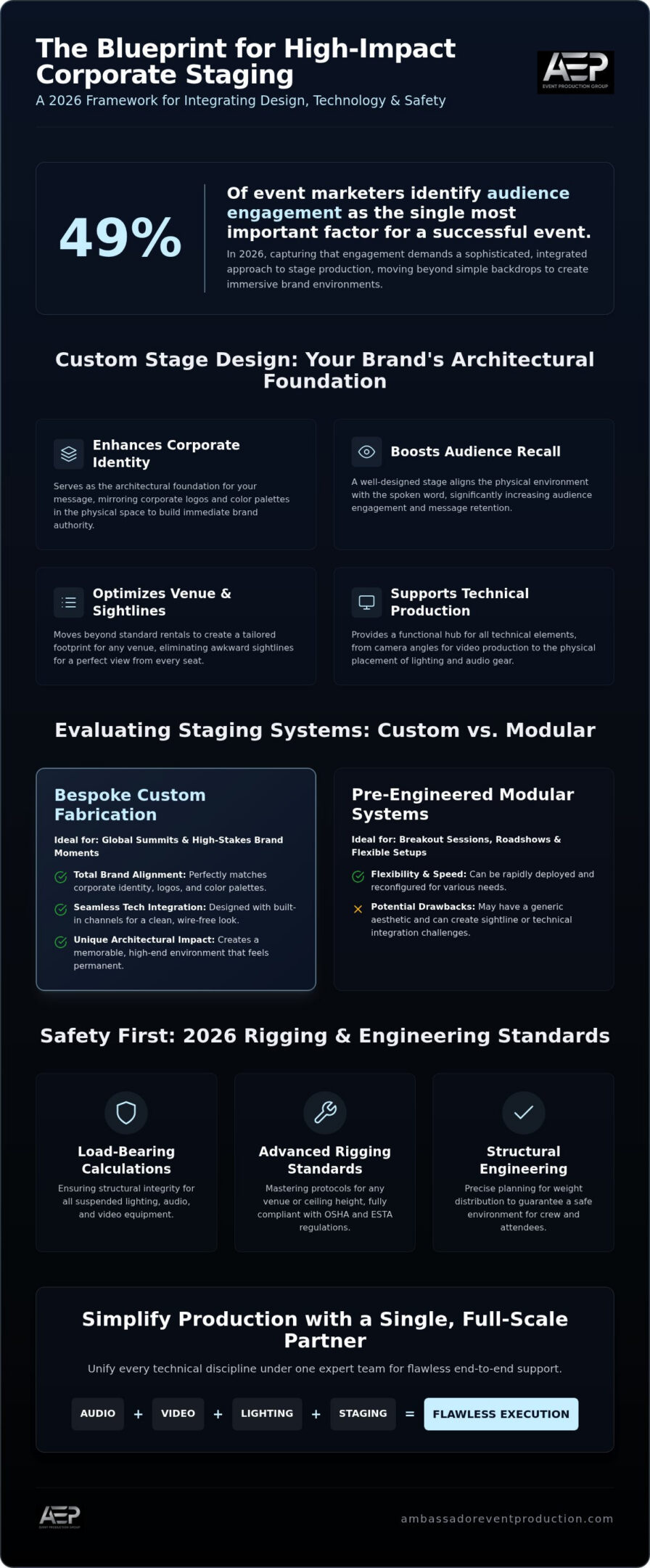
Did you know that 49% of event marketers identify audience engagement as the single most important factor for a successful event? In 2026, capturing that engagement requires more than just a simple backdrop; it demands a sophisticated approach to integrating stage design with AV and lighting. It’s natural to feel concerned about technical failures or budget shifts when coordinating complex staging. These logistical hurdles are significant, but they don’t have to compromise the impact of your message.
Discover how to transform your corporate vision into a flawless, safe, and brand-aligned stage environment with expert technical production. We’ve designed this guide to provide a clear understanding of the technical production process, helping you manage costs while ensuring every piece of equipment meets the latest OSHA and ESTA standards. We’ll walk you through the 2026 production framework, ensuring you have a reliable partner to handle the logistics so you can shine on stage.
Key Takeaways
- Learn how custom stage design serves as the architectural foundation for your corporate identity, enhancing audience recall through strategic layout.
- Discover the technical advantages of integrating stage design with AV and lighting to create a clean, wire-free environment that supports high-impact visuals.
- Compare the benefits of bespoke custom fabrication for global summits against the flexibility of pre-engineered modular staging systems.
- Ensure event safety by mastering load-bearing calculations and 2026 rigging standards for any venue or ceiling height.
- Simplify your production process by partnering with a single team that provides end-to-end support across audio, video, lighting, and staging.
Why Custom Stage Design is the Foundation of Your Corporate Identity
Custom stage design is the strategic architectural layout of your event space, specifically tailored to your brand message and technical requirements. It acts as the literal and metaphorical platform for your entire technical production. When you prioritize integrating stage design with AV and lighting, you create a cohesive environment where the physical structure supports the digital content. In 2026, corporate standards have evolved beyond the basic podium and screen. Audiences now expect immersive environments that reflect the high-stakes nature of the information being shared.
The psychological impact of a well-designed stage is profound. Research suggests that audience engagement and brand recall are significantly higher when the physical environment aligns with the spoken word. A thoughtful design eliminates distractions and directs focus, ensuring your keynote speakers are the center of attention. By treating the stage as an extension of your brand, you build immediate trust with your attendees before a single word is spoken.
Moving Beyond the Standard Rental
Standard off-the-shelf stages often fail to deliver a professional corporate aesthetic because they don’t account for the unique geometry of your venue. These modular decks can create awkward sightline issues for large audiences, especially in rooms with low ceilings or wide seating charts. Custom dimensions allow for a tailored footprint that optimizes visibility for every guest in the room. This is particularly vital for corporate event video production services, where stage height and width dictate the camera angles and framing required for a professional broadcast or recording.
Strategic Brand Alignment
Custom fabrication allows you to mirror corporate logos and color palettes through physical structures rather than just digital overlays. Incorporating varied physical textures, such as matte finishes or industrial metals, helps complement the high-brightness digital content on your LED walls. Understanding Stagecraft fundamentals ensures that these scenic elements are both beautiful and functional for the crew operating behind the scenes. When these elements work together, the stage feels like a permanent installation rather than a temporary setup. Stage architecture serves as the first touchpoint of brand authority, establishing a sense of stability and permanence for your organization.
The Technical Components of High-Impact Corporate Staging
A high-impact stage is more than a visual centerpiece; it’s a functional hub for every technical signal in the room. Achieving a clean, wire-free look requires the use of integrated lighting troughs and recessed AV channels. These built-in pathways allow technicians to run power and data directly to equipment without visible cables cluttering the performance area. When integrating stage design with AV and lighting, these architectural choices prevent the technical clutter that often distracts from a high-stakes keynote. By planning these channels during the fabrication phase, we ensure that the technology remains invisible while performing flawlessly.
The choice of stage materials significantly influences the effectiveness of intelligent lighting systems for events. Glossy finishes might look sleek, but they often create unwanted glare or hot spots for camera crews. Conversely, matte textures absorb light, allowing for deeper color saturation and more controlled environments. Physical design also impacts live event audio mixing techniques. Hollow stage decks can act as resonant chambers, causing low-frequency feedback. Our teams mitigate this by using internal damping materials and strategic bracing to ensure a neutral acoustic footprint.
Visual Integration: LED Walls and Projection Surfaces
Designing stage wings that accommodate large-scale LED tiling requires precise structural engineering. We ensure there are no structural gaps between the scenic elements and the digital screens. Inset screens provide a flush, high-end appearance, while overlay elements can add depth and dimension. Managing light spill is a critical technical task. We use light-absorbing borders to prevent stage fixtures from washing out high-resolution video surfaces. If you are planning a complex visual setup, our integrated technical production teams can help align these variables during the design phase.
Audio-Visual Synchronization
True technical mastery often happens where the audience can’t see it. We incorporate hidden speaker placements within custom stage builds to deliver high-fidelity sound without visual clutter. This ensures that the audio originates from the stage direction without blocking sightlines. Cable management is equally vital for safety. We design specific entry points for cabling that ensure a zero-trip environment for your speakers. Using 3D technical renderings before the build begins allows us to prevent on-site surprises between the stage fabrication and the AV crew. This proactive approach ensures that confidence monitors and teleprompter cutouts are perfectly positioned for the speaker’s natural line of sight.
Evaluating Custom Fabrication vs. Modular Staging Systems
Selecting the right staging solution requires a careful balance between your creative ambition and logistical reality. Custom fabrication offers a “no-limits” approach, making it the preferred choice for flagship annual meetings and global summits where brand distinction is the top priority. Modular systems, on the other hand, provide high-impact results using pre-engineered, reconfigurable components. The right choice often hinges on the “life of the event.” Is this a one-off gala where you need a singular, breathtaking look, or a multi-city national tour that requires consistency across varied venue sizes? While modular systems typically save on labor and setup time, custom fabrication wins when the goal is a unique, award-winning environment.
The process of integrating stage design with AV and lighting feels different depending on which path you choose. With custom builds, the technical channels are carved directly into the design. With modular systems, we use clever rigging and skinning techniques to hide the infrastructure. Both methods can achieve a professional, wire-free look, but the planning phase must account for these structural differences early in the production timeline. A unified approach to technical event production ensures that these decisions are made collaboratively across every discipline before a single piece of equipment arrives on site.
When to Invest in Custom Fabrication
Modern modular staging has evolved beyond the basic black platform. We often use modular frames as a structural skeleton, then apply custom “skins” or fabric wraps to achieve a bespoke look at a more accessible price point. This hybrid approach is also a win for sustainability. By using reusable structural elements, we significantly reduce the waste associated with one-time builds. Modularity is a core component of successful live event technical direction because it allows the stage to scale. If your tour moves from a massive ballroom to a more intimate theater, a modular system adapts without requiring a complete redesign. It provides a reliable, predictable framework for your technical crew, ensuring setup remains efficient regardless of the venue’s limitations.
Safety First: Rigging and Structural Engineering Standards
Safety serves as the invisible architecture behind every successful keynote. When integrating stage design with AV and lighting, the physical load on the venue’s infrastructure increases significantly. High-resolution LED walls and complex lighting arrays can weigh thousands of pounds, making precise load-bearing calculations a critical priority. As of July 2026, OSHA 29 CFR 1926.251 requires all rigging equipment to be inspected before every use. We treat these regulations as the baseline for our structural engineering. Every multi-level stage or heavy overhead element undergoes a rigorous review to ensure it can handle the dynamic forces of a live production environment. For productions pushing the boundaries of immersive technology, mastering advanced rigging techniques for corporate events is essential to balancing aesthetic ambition with uncompromising structural integrity.
Beyond the heavy equipment, we prioritize human safety through ADA-compliant ramps and clear ingress and egress routes. A stage that looks beautiful but lacks safe access is a significant liability. We ensure that every speaker, regardless of mobility, can enter the spotlight with confidence and dignity. Navigating venue-specific rigging points and ceiling height limitations requires a partner who understands the unique structural personality of every ballroom or convention hall.
Rigging Safety Protocols for 2026
Understanding the difference between a “Point Load” and a “Uniform Load” is essential for overhead rigging. A point load places the entire weight on a single rigging point, while a uniform load distributes that weight across multiple spans. As of May 2026, the industry follows BSR E1.47 guidelines for entertainment rigging system inspections to ensure maximum reliability. Ambassador prioritizes certified rigging professionals for every national event to manage these complexities. We handle all the necessary documentation for venue compliance and fire marshal approval, so you don’t have to worry about last-minute shutdowns or safety violations. For a comprehensive overview of what these inspections entail, review the full technical requirements for conference staging to ensure your production meets every 2026 standard.
Structural Integrity and Stability
One common technical hurdle is “Stage Bounce,” which occurs when a stage floor isn’t properly braced for movement. This isn’t just a comfort issue; it can cause visible camera shake during high-definition video recordings and disrupt sensitive audio equipment. Our engineering team designs silent, solid floors using internal damping and strategic bracing. For stages with high-profile vertical elements or those facing outdoor wind loads, we calculate specific ballast requirements to ensure absolute stability. A technical crew’s mastery of rigging is the ultimate insurance policy for an event. If you want to ensure your next production is as safe as it is spectacular, reach out to our staging and rigging specialists to start the planning process.
Partnering with a Full-Scale Technical Production Team
Success in high-stakes corporate events depends on the seamless coordination of multiple disciplines. When you choose a single partner for integrating stage design with AV and lighting, you eliminate the friction that often occurs between separate vendors. Miscommunications regarding cable paths or weight distribution are solved during the design phase rather than on the show floor. This “one-stop” approach ensures that every technical director and event lead is working from a single, unified blueprint. It simplifies the planning process and provides a clear point of accountability for every structural and digital element in the room.
Ambassador Event Production brings a legacy of stability to this complex process. Founded in 1955, our family-owned and operated business has spent over 70 years refining the art of technical execution. We operate with a sense of quiet confidence born from decades of experience in ballrooms and convention centers across the country. Our national service coverage means you receive the same high-touch service and technical mastery regardless of where your event takes place. We position ourselves as a dependable ally, handling the complex logistics so you can focus on your audience.
The Integrated Production Workflow
A single technical team ensures that your audio, video, and staging are perfectly aligned from day one. In our workflow, the person designing the stage is in constant communication with the lighting lead and audio engineer. This internal synergy allows for personal accountability that a loose collection of contractors can’t match. We treat your event as a shared journey, focusing on a streamlined load-in and strike process. A unified crew moves faster and works more safely. This methodical approach reduces the stress on your event planning team and ensures a polished, professional result.
Your Next Steps for a Flawless Stage
Preparing for a technical consultation is the first step toward a successful production. We recommend gathering your venue dimensions, brand guides, and any specific tech riders from your keynote speakers early in the process. Bringing in technical experts during the initial design phase allows us to identify potential structural challenges before they become costly site-day changes. By focusing on the behind-the-scenes mastery of your environment, we allow you to focus on your message while we handle the heavy lifting. If you’re ready to elevate your corporate presence, partner with Ambassador Event Production for your next custom stage design.
Building Your Vision for 2026 and Beyond
Creating a high-impact corporate environment requires more than just high-end equipment; it demands a strategic architectural foundation. By focusing on integrating stage design with AV and lighting from the very first design meeting, you ensure that your technical infrastructure supports your brand message without distraction. Whether you choose the bespoke flexibility of custom fabrication or the efficient scalability of a modular system, your stage must remain a safe and stable platform for your keynote speakers. Adhering to the latest 2026 rigging standards isn’t just about compliance, it’s about protecting your audience and your professional reputation.
Ambassador Event Production has provided expert technical production since 1955. As a family-owned business, we offer a level of personal accountability and excellence that comes from 70 years of industry experience. We provide integrated video, audio, lighting, and staging services nationally, ensuring your event is flawless regardless of the venue. Let us handle the complex logistics while you focus on your corporate vision. Request a Technical Consultation for Your Custom Stage Design today. We’re ready to help you shine in the spotlight.
Frequently Asked Questions
How much does a custom corporate stage design typically cost?
Costs for custom stage design depend on factors like venue size, material choices, and the complexity of the integrated technology. A basic stage rental differs greatly from a bespoke environment featuring custom fabrication and high-end finishes. We focus on providing a transparent breakdown of labor, transport, and material costs during our initial consultation. This ensures your budget is utilized effectively to achieve the highest possible impact for your audience.
How long does it take to design and fabricate a custom stage?
The timeline for designing and fabricating a custom stage varies based on the complexity of your vision. This period typically covers several weeks of planning, from the initial creative concept and 3D renderings to final structural engineering and construction. Starting the process early allows our team to source specific materials and conduct thorough safety checks. We maintain a steady rhythm to ensure your stage is completed and ready for load-in before your event begins.
Do I need to hire a separate company for rigging and AV?
You don’t need to hire separate companies when you partner with a full-scale production team. Choosing a single provider for staging, rigging, and AV reduces logistical friction and ensures all components work together perfectly. Our team specializes in integrating stage design with AV and lighting, managing everything from load-bearing calculations to cable management. This integrated approach provides a reliable point of accountability and a more seamless experience for your event leads.
Can you provide 3D renderings of the stage design before production?
We provide comprehensive 3D renderings to help you visualize the final environment before production starts. These technical models show exactly how your brand colors, textures, and digital content will look under various lighting conditions. You can evaluate sightlines from every corner of the room to ensure every attendee has a perfect view. This collaborative tool is essential for aligning your corporate vision with our technical execution, preventing any surprises during the on-site build.
What is the difference between a modular stage and a custom-built stage?
Modular stages utilize pre-engineered, reusable frames that offer a balance of speed and versatility for many corporate events. Custom-built stages are bespoke structures designed from the ground up to reflect a specific brand identity or fit a unique venue layout. While modular systems are highly efficient for national tours, custom fabrication allows for specialized finishes like plexiglass or industrial metals. We help you evaluate which system best meets your goals for engagement and visual impact.
How do you ensure the stage design meets venue safety and fire codes?
Ensuring compliance with safety and fire codes is a core part of our technical production process. We provide all required documentation, including flame-spread certifications for fabrics and detailed rigging plots for venue approval. Our structural engineers perform precise load-bearing calculations to ensure all overhead elements are secure. We work closely with local fire marshals and venue safety officers to guarantee that every aspect of your stage design meets or exceeds national safety standards.
Can a custom stage be reused for multiple events in a national tour?
Custom stages can be designed for reuse across multiple events or a national tour. We focus on building durable scenic elements that can withstand the rigors of frequent transport and handling. Our crew creates specific packing strategies to protect your investment between different venues. By designing the stage to be reconfigurable, we ensure it adapts to various room sizes while maintaining a consistent brand aesthetic for every audience on your tour.
How do you handle audio-visual integration within the stage design?
We handle audio-visual integration by building specific technical bays and cable troughs directly into the stage architecture. This method of integrating stage design with AV and lighting ensures that all power and data lines remain hidden from the audience’s view. We also incorporate recessed cutouts for confidence monitors and teleprompters to help speakers maintain a natural connection with the crowd. This meticulous attention to detail ensures a clean, professional look that supports your technical event production.